
hero image emotional wellbeing

spot the 5 sneaky signs of burnout

You know you’re heading for burnout when your to-do list feels so long and daunting that you shove it in a mental drawer and pretend it doesn’t exist. But sometimes the signs of burnout aren’t so obvious— and it’s those sneaky signals that you need to watch out for. 

I can shine a light on where to look. 

I’m as guilty as the next person of taking on too much. But even when you deeply love what you do, you still need balance and boundaries. 

I was sent that reminder a few weeks ago. A ton of things were happening at once, and the energy I needed to get it all done wasn’t showing up. So I got still long enough to become aware of the fact that burnout was creeping up. 

Since I caught the burnout mid-creep, I had time to take action before it dragged me down. 

You can do that too.

This podcast recording had divine timing. It gave me the chance to review the subtler signs of burnout and connect with three lovely listeners to share real-time strategies for overcoming the feeling of being overwhelmed that we all encounter. 

not all forms of burnout look the same

One of the women who joined me on this episode expressed that even though she felt tapped out, she really didn’t have anything going on that would typically lead to being overwhelmed, such as a stressful job, kids and money worries. 

And she felt kind of guilty about that. 

Folks, we’ve reached a point where people believe they need permission to feel what they feel, including feeling burned out. 

I totally get it. The same thing happens when I talk about unresolved trauma. There is always someone who responds with empathy, but then follows it up by saying something like, “But other people have it so much worse.”

Let’s agree to banish phrases like that immediately and permanently.

we can hold space for others’ difficult experiences without comparing them to our own or diminishing our feelings 

That caller’s story was super valuable because it opened up the opportunity to address different types of burnout.

There’s the burnout that comes from having a physically demanding schedule. There’s the burnout that comes from too much emotional or mental labor. 

There’s the burnout that comes from unresolved trauma. 

And you can also experience burnout simply because your brain is overactive and churning out overwhelming ideas and thought patterns.

(I bet that last one is a Dear Gabby truth bomb moment that a lot of you needed to hear!)

listen to this episode to learn:

  • 5 sneaky signs of burnout (including one that always makes people go WHOA)
  • How to notice the signs before you get overwhelmed
  • The exact steps to take if any of these signs resonate with you
  • What to do if you suspect you’re already burned out 

I walk you through a tapping meditation and breathwork that is specifically designed to help you recover from different types of burnout. This episode is filled with beautiful tools and techniques—plus, you’ll start to perceive your encounters with burnout with more compassion, connection and calm so you can explore creative possibilities for healing.

We all need this right now, more than ever. 

weekly card reading
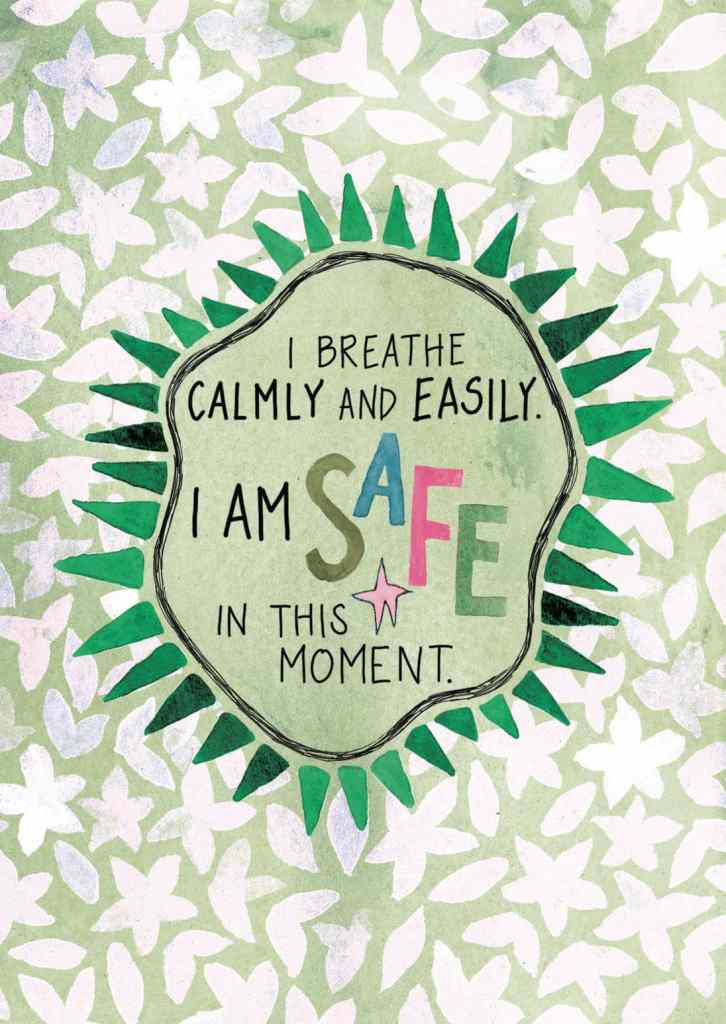
I breathe calmly and easily. I am safe in this moment.

Most of us live life trying to control our circumstances in order to feel safe. We catastrophize, obsess over fearful thoughts, or feel an unconscious sense of anxiety in an attempt to control what’s happening—which never really works.

But surrendering isn’t easy. And we don’t have to heal this desire to control all at once. For right now, for this moment, just breathe. That’s enough surrender for today.

get more gabby

free manifesting meditation to attract your desires

By submitting your number, you agree to receive recurring automated promotional marketing text messages from Dear Gabby, Inc. and Gabby Plus, Inc. at the cell number you entered above. Consent is not a condition of any purchase. Reply HELP for help and STOP to cancel. Msg frequency varies. Msg and data rates may apply. You also agree to our Terms & Privacy Policy.

disclaimer

This podcast is intended to educate, inspire, and support you on your personal journey towards inner peace. I am not a psychologist or a medical doctor and do not offer any professional health or medical advice. If you are suffering from any psychological or medical conditions, please seek help from a qualified health professional.

dear gabby #156 Aug 14, 2023 emotional wellbeing

5 signs of burnout and how to overcome it

Listen on:

The following podcast is a Dear Media production.

GABBY: Hi there, Gabby here. This podcast is intended to educate, inspire, and support you on your personal journey towards inner peace. I'm not a psychologist or a medical doctor and do not offer any professional health or medical advice. If you are suffering from a psychological or medical condition, please seek help from a qualified health professional.

If you're a regular listener of this show, you know that for the most part, I'm pretty chill and believe it or not, that's true even when it comes to my parenting style. I'm that mom who can stay calm even during a four-year-old meltdown. Seriously.

And I know that's kind of a brag, but it's something that I'm proud of and you might be wondering, Okay, Gabby, really, how do you stay calm when your kid's freaking melting down?

Well, well, number one, I know I can trust the universe when the sh*t hits the fan. That's period. And number two, I lean heavily on my meditation practice. I've been meditating daily for 17 and a half years. Yep, that's right. I've never skipped a day of meditation. I just haven't.

And it is this practice that has helped me navigate the most stressful situations in my life. And it's also given me the ability to really lower my anxiety level. So whether you already have a meditation practice or if you've never tried it before, I want to help you cultivate that same sense of inner peace.

And it comes with practice and it comes with commitment. And that's why I'm giving you my most impactful guided meditation for anxiety relief. And it's totally free. It's yours. It's a gift from me. People, it's free. So take advantage of this today. This also happens to be one of my favorite meditations, so I'm really excited to share it with you.

You can download my free meditation for anxiety relief at DearGabby.com/anxiety. I promise you that this practice is gonna really help you begin your journey toward profound inner peace. It will give you a tool for self-soothing in moments of anxiety and stress. And I just want you to use it so that you can really create that beneficial inner state of peace that can be very sustainable when you practice and you show up and you give yourself that permission to turn inward.

That's DearGabby.com/anxiety.

Hey there. Welcome to Dear Gabby. I'm your host Gabby Bernstein, and if you landed here, it is absolutely no accident. It means that you're ready to feel good and manifest a life beyond your wildest dreams. Let's get started.

Welcome back to Dear Gabby. Welcome back. We are in the studio today. We have tons of folks on the Zoom ready to be Dear Gabby'd.

This episode is really important for me in this moment right now. I think that one of the jokes I have like a running joke in my life is that I do my work to heal myself. It's not a joke. It's serious. I write my books to heal myself first. I do this podcast to remind myself of the wisdom that I write about.

I literally speak the truths that I teach for myself first. So, I called up Josh and we had a little riff on what we wanted this episode to be about. And it was really loud and clear. I said, well, actually he brought it to me. He said, how about burnout? And I said, dude, that's it. That's the topic. I need it now.

I am currently in a personal moment of recognizing the part of me that has the ability to burn out. So let's just call it the burnout part. And I want to call it a part of me because I don't want to say out loud, Oh, I'm someone who's burnt out all the time. That's not true. A part of me can get burnt out when literal things happen, like when just a lot needs to get done.

I can get burnt out when I reconnect and take on the belief that if I don't do it, nobody else will. Sometimes in my true reality, it does require that I have to do it. But burnout isn't an option for me anymore in my life. And so if I notice myself going into that direction, I can start to recognize the signs.

I can witness with a lot of compassion and connection and love that part of me becoming extreme. And I can, in that moment choose to check in and realign and really take care of that very extreme part of me that I don't want to live in. And be led by anymore. And so I noticed it in the last two weeks. I started to see the signs of burnout.

And sometimes the signs are revealed to us before we even realize, Oh yeah, I'm actually burnt out or I'm burning out or I'm on the brink of burnout. For me, the signs are actually really common signs of burnout. One is brain fog. I have been walking around not remembering names, not remembering faces, not remembering words.

Really foggy. Just literally like, is there something wrong with me? Do I have mold poisoning? What is wrong with me? And I had to really track it back to realizing that the times in my life when I've been really burnt out, I had extreme brain fog. Huge, huge sign of burnout. Brain fog.

Another sign is moodiness and irritability. Oh my lord, when I am in a place of burnout, am I easily irritated? Super moody. I have to like take all these extra breaks for myself, separate myself from situations. I can get really erratic. My poor husband takes the brunt of it. It's not a good look. Burnout.

So, another sign of burnout that I noticed right away was physical and mental overwhelm, lots of fatigue, exhausted, totally exhausted.

And it's funny, I asked Josh to kind of riff with me a bit on some of these signs of burnout and I was like, check, check, check, check, check. So exhausted, physically drained, physically overwhelmed, mentally overwhelmed, and sleeping in longer. Struggling to wake up in the morning, so, so tired, needing extra meditations throughout the day, not able to work at the capacity that I normally would because I was burnt out.

The fourth sign of burnout is oftentimes, when you do partake in drugs or alcohol or substances, you can become really extreme in that behavior during this time. For me, while I don't have a drug that I can choose, and I don't have alcohol in my life 18 years sober, I do have some habits that are socially acceptable, that are not life-threatening for me, that I typically have dormant.

That they become extreme in these moments of burnout. So here we are. Number one was sugar. I don't eat sugar, but I noticed myself wanting to have that healthy cupcake or yesterday it was the yogurt. There's this amazing yogurt that you can get in New York City and you can get half of it. I like to sometimes get the sugar free.

It's just fruit and yogurt. When I'm really in a place of burnout, I might do half of the yogurt as the sugary yogurt. And I might be thinking, okay, Gabby, you're a loser who cares about half of the yogurt, but I don't eat sugar. So when I put a little sugar in, that's a lot of sugar. And so that was a sign for me.

Oh my God, I'm in burnout. I'm looking for the sugar to wake me up, to give me focus, to give me as little hit for this moment. Even with coffee, I was taking my coffee or my matcha to another level that wasn't healthy. I was looking for substances to really keep me up and keep me going.

Here's number five, our fifth sign of burnout, loss of motivation. For me, it would happen. The weekend would hit. I was completely depleted. I couldn't do anything else. And I have a four-year-old who deserves my energy, my intentions, my love, my commitment, and my undivided attention. And I would be super unmotivated to, to get there. I just want to say, okay, I got to lie down or mommy needs to take a break.

And my poor kid, he's four. He's got more motivation than any human in the world. And he deserves mine. And so, as I started to be the witness of these different signs of burnout, I'm here right now. I had a good night's sleep last night. I had a nice meal. I woke up and I had half a cup of coffee. I ate some protein because I know that's going to really support me.

I cancelled a meeting before this recording because normally, burnout Gabby would be taking the meeting and then coming over here and rushing my makeup and getting into the set and already losing my voice and pushing, pushing, pushing.

Burnout Gabby cannot coexist with my current reality anymore. And so, I want to support that part of me and I asked that part of me that burnt out part of me, What do you need? And that part of me that's been burnt out said cancel the fucking meeting. And so I canceled the marketing meeting so that I could just be in my creative space today with Josh and Amir and you and everybody that's in the studio and everybody that's with me on Zoom. My intention is to be in a creative space today not burn out.

So when we have that moment to reflect on the five signs of burnout and notice how we are affected by this extreme pattern that is sometimes a protection mechanism. Sometimes it's a way that we just get into something because we don't think that it's possible if we don't do it that way. And I think there's a difference between those seasons in our life when we have to work hard versus burnout because working hard can also come with boundaries.

Working hard can also come with Some intuition and it can also come with some inner guidance and wisdom, whereas burnout lacks that intuition. It's a way of forcing. It's a way of pushing, controlling. I don't want it for you and I don't want it for myself. So I want to talk to you today about burnout. I want you to really take in those five signs of burnout and really look at your life right now and say, Hmm, am I checking off any of those signs?

What's up with me? And without any judgment and a lot of love, just listen for some solutions today. Listen to the guests that come through. Give yourself a moment to pause and reflect. And let me guide you because I'm living it and I believe there's no greater opportunity to teach divine wisdom than when you're applying it in your own life.

So here I am ready to be a conduit for you and for myself in the same moment. Let's go.

[AD BREAK]

This episode is brought to you by BetterHelp. I have to say that I'm really proud to have BetterHelp as a sponsor on this show. Why? Because I am a huge proponent of therapy. Look, life is super challenging, period. And without support, I don't know where I would be personally. And I know that's the same for so many people in my life.

It's been a priority in my life for almost two decades, and my therapy has truly helped me recover from trauma, stay sober, be a good wife, be a great mother. It saved my life, truly. And so whether you're struggling with decisions around your career or you're having issues with relationships or just a lot of things, all the number of things that are going on in the world, therapy helps you stay connected to what you really want while you figure out how to navigate your life.

And that, my friends, is what BetterHelp is all about. With BetterHelp, therapy can support you with so many things like learning positive coping skills and how to set boundaries and all of these different ways of empowering yourself to be a better version of you. And BetterHelp makes it easy. It's all online.

You just fill out this brief questionnaire, you get matched with a licensed therapist, and you're going to be on your way. And with BetterHelp, you can do your sessions from the privacy of your own home, on video or on phone, whatever you prefer. And scheduling appointments is super duper easy. And they are committed to making sure that you're well matched with the best therapist for you.

Let therapy be your map with BetterHelp. Visit betterhelp.com/deargabby today to get 10% off your first month. That's betterhelp.com/deargabby.

Listen up, my friends, creating and maintaining healthy habits is not easy, not easy at all. The habit part is the hard part, and I know for myself, I've had a lot of different behavioral changes and habit changes, and I have to create a lot of small steps to get there to create that big change.

But by doing that and really committing to building that major habit, I know I have the potential to change my life for the better. I've built so many small little steps into habits and rituals over the years. And most recently, I did this with Seed’s DS1 Daily Symbiotic. What I started doing was setting a little reminder for myself.

I kept the glass jar right next to my coffee maker. And in my kitchen, I would just go make my coffee in the morning and I would take my DS1 daily symbiotic. I know it sounds simple, but it really worked. I take two capsules once a day on an empty stomach. That's it. And I'm telling you, it's super easy.

Now, if you're like me and you've taken probiotics before, but you haven't felt the difference, it's probably because whatever you were taking isn't designed to survive in your stomach and the digestive enzymes. So here, let's get a little nerdy for a second. Their capsule in capsule via cap safeguards viability through digestion.

So an average of 100% gets to where it has to be. Boom, period. So you've got restored balance in your digestion and more energy in your mind and your body. You're just going for it. Start a new healthy habit today. Visit seed.com/DearGabby and use code Dear Gabby to redeem 30% off your first month of Seed’s DS1 daily symbiotic.

That's seed.com/DearGabby and use code Dear Gabby.

[END AD BREAK]

CAROL: Hi.

GABBY: Hi, honey. Welcome to Dear Gabby.

CAROL: Thanks.

GABBY: Does this topic resonate with you?

CAROL: When you started saying the symptoms, it really did because I've just been just so tired lately and I usually don't take a lot of caffeine, but I've literally been taking these capsules of 167 milligrams of caffeine and it really hasn't made much of a difference.

GABBY: Are you feeling like you're pushing yourself and extreme in any way? Work wise, really, I don't. I have ideas running through my head and there's stuff I want to do, but it just seems like I have no motivation to actually do them.

CAROL: That's an interesting point, Carol, because what happens when we have a lot of ideas and lots of thoughts and lots of momentum happening in our head, and we are thinking about one thing and then switching to the next thing.

And as women, we do a lot of multitasking in real time and in our brain. And so if we flip flop from one project to the next, or one thought to the next, or one idea to the next, that can really cause some burnout. It can really feel overwhelming. Sometimes we can even just get burnt out on anxiety, just, just anxious thoughts that are running the show.

So if you're jumping from this thought to that catastrophe, to that fear, we can actually become so overwhelmed by the overactive mind that we can burn out. So it's not necessarily always just a work-related burnout or a family-related burnout. It can be something that's happening in our mind. It can be overactive monkey mind, overactive thoughts, overactive fears, overactive anxieties.

And when we let those thoughts take over, we can feel exhausted. We can feel unmotivated. We can feel overwhelmed and sometimes even turn to substances, like you said, the extreme use of caffeine in this moment. So I would say that my hypothesis is that this overactive thinking is causing you to burn out.

Does that resonate, Carol?

CAROL: I think so. I mean, I just lately it's been like I had to force myself to do things that normally I really enjoy like, like quilting or baking or riding my horses.

GABBY: Right. So I'm not a medical doctor and I would always advise if you're having any kind of symptoms like fatigue or lack of motivation that you would talk to a medical doctor and just get a diagnosis of what might be going on.

Oftentimes, when we do end up in those doctor's offices because you're saying, Oh my God, like for me, I'd say, Oh, you know, my left arm is numb. These are things that have literally happened in my life. Or I have a pinched nerve or I can't breathe or, you know, I'm, I'm having gastrointestinal issues. All of those physical symptoms were oftentimes psychosomatic effects of burnout.

And so it is worth bringing all of your symptoms to the attention of a medical doctor. When the diagnosis comes back to you as burnout, don't be surprised. It may be that there is a deeper diagnosis that also this burnout is not supporting anyway. How can we heal when we are in a mental state of chaos?

Every cell in our body is going towards the fight-flight response and we don't have any of the energetic support of our parasympathetic nervous system to help us settle and relax and take it in and just move in a more steady direction. So my advice for you today, Carol, is to really lean into breath.

This is for anyone out there that's struggling with burnout. I want you to place your hand on your belly and your other hand kind of around the side of your rib cage. So hand on your belly and the other hand on the side of your rib cage. I want you to breathe in deeply through your nose or your mouth, really whatever feels good for you.

But nostril breathing is often the most effective. Breathing in through your nose or mouth and extending your diaphragm till you feel it completely full as if there is a balloon expanding inside your diaphragm and breathe until it's totally filled up. On the exhale, slowly relax your diaphragm and relax your breath and relax your body.

So that you can let that balloon deflate. Take another really, really deep breath in and feel on the side of your rib cage that your diaphragm is expanding and on the front of your belly that your diaphragm is expanding and allow yourself to breathe into that space in your body. And do this with me now, Carol, please.

And on the exhale, just let that go completely. Wherever you are right here, right now, let's do three more breaths together, breathing in completely and expanding your diaphragm to allow it to expand, to just feel open and to feel that expression of breath coming through. On the exhale, just let it go completely; relaxing your diaphragm.

Let's do two more. Breathing in completely expanding your diaphragm. Joshua, do it with us; expanding your diaphragm. Amir, do it with us. And relax your diaphragm. Take one more deep breath in. Expand your diaphragm and on the exhale, let it go. How do you feel right now, Carol?

CAROL: A little lightheaded.

GABBY: My guess if you're lightheaded, I'm glad that you said that.

Were you actually expanding your diaphragm and relaxing it or were you doing the opposite breath?

CAROL: I'm used to doing some breathing where you like you breathe in for four and then you release for eight. And so sometimes that it's not like releasing the diaphragm. It's it's like it's like controlled release. So I had to like really tell myself just let it go.

GABBY: That's beautiful.

Just let it go. There's your metaphor today, honey. Stop controlling your breath. Just let it go. Excellent. Thank you, sweetheart. Thank you.

CAROL: Thank you.

GABBY: One thing I want to mention is if we are breathing in a way where We are inhaling and contracting our diaphragm on the inhale and then on the exhale, you know, letting it out.

That's actually going to be the opposite breath that in many ways could make you feel lightheaded, dizzy, nauseous. So sometimes having your hand on your belly and feeling your belly expand or lying on your back and putting a book on your belly, just seeing it go up and down and up and down, that can remind you that that deep belly breath is indeed happening correctly.

Alright. Who's next?

All right, Katie. You can jump right in.

KATIE: Okay. I just was really resonating with the overwhelm and the checklist. I was like, okay, yes, I am doing that. I'm doing that. I'm just overwhelmed in, you know, the, the things that I desire in my life. And then the things that I'm hopeful that I can overcome.

Everything is just coming at me so fast and mostly in my head that I just trying to manage it all and just like, okay, where do I even start?

GABBY: I'm gonna help you here. Katie said the word manage it all. Overwhelm is a part of who we are and in from an internal family systems therapy IFS Which I'm talking a lot about here on the show We have a whole episode with Dick Schwartz that you can go listen to, he's the founder of IFS I’m writing a book about it right now From an IFS perspective, we have all these different parts of us that are protectors, protection mechanisms.

And so, when we feel out of control, sometimes we can find ourselves led to burnout because of all of the managing. Does that resonate, Katie?

KATIE: Yeah, definitely.

GABBY: So in IFS, the protector parts, there are two different types of protectors. One is a manager. The manager could literally just be managing, controlling, trying to do everything, overthinking.

These managers are extreme patterns that are with us on a day to day basis. Managers are just trying to manage our big feelings, manage our thoughts. And so, the fact that you literally use the word, I'm trying to manage everything is actually a sure sign that there's a protector part of you that is triggered for some reason, maybe feeling out of control, feeling like you have to do it all.

I'm just putting ideas out on the table, speaking for my own parts and try to manage everything in your life that managing, managing, managing leads to burnout. And so, that extreme pattern of managing everything in our life, trying to keep it all together. If you ever find yourself saying things like, I'm just trying to keep it all together, or I can't get it all done, or I'm trying to manage everything.

That's a sign that you're on your way or already in burnout. And so, instead of trying to force yourself to stop or hit a bottom that you can't recover from so that you're just now forced to stop and you have no other choice, I'd like you to offer that desire to manage, that part of you that's just managing, managing, managing.

Offer it a little curiosity. And right here, right now, we can practice a method from my new book, Self Help, that I'm writing, and we can just take a moment and you don't even have to say anything. I just want you to follow my lead and tell me how you feel when we're done. And anyone that's listening, if you've felt in any way that you've been managing or burning out or controlling or just overriding your wellbeing, let's check in with that part of us right now, if you feel comfortable doing so.

So we're going to choose to check in, which is the first step, just choosing to check in with that part of yourself that's in overwhelm, that's burnt out.

Hello. There you are. I see you're there. And even though you're there, I still love you. And I love myself deeply and completely. Then in the second step, let's become curious about it.

How long has this part of us been around? Does that overwhelm have an age? Does it have a gender? Does it have a time frame, thoughts or physical feelings or beliefs attached to it? What does that overwhelm, burnout, manager want us to know right now? For me, I can say safely, it's the younger part of me that's like, if everything isn't in control, I'm going to lose my s**t.

If I feel unsupported, I lose my mind and I will do anything I have to, to get to the place of safety and therefore I will burn out. So is there something that that part of you wants to tell you? Just become curious. And once you have some information about that part of you that's coming forward, that burnt out part, let's ask it with a lot of compassion and a desire to create connection.

Alright, burnt-out part. What do you need right now? And when I asked myself this yesterday, my burnt-out part of me said, I need to stare at the flowers and listen to music. And so I turned off my phone. I didn't have any devices. I turned off the internet and I stared at these beautiful flowers that I picked from my garden. And I listened to some really soothing music. That was it.

And so, when you ask that part of you right now. Katie, you can answer this if you want. What does it need? What does it say?

KATIE: As you were talking about what you needed, it reminded me this weekend we went hiking all over Moab and there were beautiful cactus in bloom and so many wildflowers and just being in the desert and I live in the desert, but in the city of the desert. But I literally came home and was so energized yesterday that I was able to do all the things I needed to get done.

And it was that connection with nature. And I really think that's something that I needed. Getting out there and hiking and being connected with the earth is super important for me.

GABBY: Yes, yes, yes, yes, yes.

KATIE: If I just head out on a hike or something. I live near the mountains. I need to be able to remember that that’s what my my body and my soul need.

GABBY: What a great response. Sometimes a divine antidote to burnout is to sit on a rock, is to go for a hike, is to get your hands in the dirt and create a garden be outside. It actually does a lot to your brain have your eyes wide open in daylight and to be able to be in nature because it actually expands us.

And when you said the word connected, connected to nature, one of the qualities of self with a capital S our truth, the God within us, the spirit within us, the inspiration within us, self with a capital S, one of those qualities is connection. And so, when we connect to the earth, it's a direct line to self energy and self is not burnt out.

Self has an open heart. Self is relaxed. Self is at ease. So you've received a message from self by asking what you need. And that message is go out in nature. Self can help you. That's why I'm writing the book, Self Help. Okay, baby? Here we go.

KATIE: Got it. I love it. Can't wait till I get the book.

GABBY: Thank you, Katie.

[AD BREAK]

Yesterday I was getting my makeup done by my makeup artist, and she was also doing my hair. And she grabs the back of my hair to start curling it before my event. And she goes, Oh my God. She goes, I am shook. How is your hair so thick? And I started laughing. I was like, Oh my god, oh my god, oh my god. I can't even believe that you, that you noticed.

It was so exciting to have somebody else notice what I was noticing. My hair is really long right now and really thick. And it is because of a product that I've been using for several months now. And it's a game changer, people. I've tried a lot of different products in the hair care world, and this is the one.

Vegamour. O M G. I can honestly tell you that I have visibly thicker, fuller, shinier hair for sure. And my scalp feels super healthy. I'm obsessed particularly with the shampoo and conditioner. Because what happens is, is you do your shampoo, you actually feel your hair is thicker with the shampoo. And then you put the conditioner in and you actually rub the conditioner into your scalp. So you're getting this conditioning of your hair but also this scalp treatment at the same time. I leave it in for 10 minutes and then I wash it out. I have a healthy scalp, healthy thick hair. I don't even have to blow dry my hair and it's still thick.

And Vegamour's products are 100% cruelty-free and they never use any toxic chemicals. So give yourself the hair you never thought you could have with Vegamour. For a limited time. Dear Gabby listeners, get 20% off their first order by going to vegamour.com/Gabby and use code Gabby at checkout.

That's vegamour.com/Gabby. Code Gabby to save 20% on your first order; vegamour.com/Gabby, code Gabby.

[END AD BREAK]

GABBY: One more guest today. Hi, Femke.

FEMKE: Hi.

GABBY: Hi, sweetheart.

FEMKE: Hey, so nice to see you.

GABBY: It's very nice to see you too.

FEMKE: Well, such a coincidence. I am struggling with burnout for, I think, already two years. So, and I really hit rock bottom. So I, yeah, then I, uh. Couldn't do anything anymore. And now I'm recovering, but still I cannot, I'm easily overwhelmed.

So I really need to find my way, what I can handle and what I cannot cause easily, if there are emotional things happening, then yeah, I'm out of balance again.

GABBY: Sure. I'm so happy that you're here today because I can really address this with you. So there's two things that have to happen when we become aware of our burnout.

One is we logically have to start to create some boundaries. I literally said today to Josh, I'm no longer doing marketing or business-related work on the days that I'm doing creative work because I don't have to and I'm not going to because it will burn me out. Or something along the lines of I will be in bed by nine o'clock or I turn off my phone for three hours before I go to sleep at night.

These boundaries are necessary and those boundaries come from our logic and our commitment to ourselves and from a right-minded place but we also need tools that we can use in the moments when the burnout gets triggered.

Because while we can have all these boundaries, there's gonna be plenty of moments when those boundaries are overridden by a trigger or something emotionally is disturbing and we just check out, we just lose track of our ability to stay in that zone.

So first step is to make those boundaries non-negotiable and just to also understand and recognize that you may have triggers that override those boundaries when they're triggered, you will now, as you start to develop these boundaries in your life, begin to develop a little bit more space between you and the burnout, which helps you recognize that burnout is a part of me. It's not who I am.

And the more you can see the burnout as a part of you, as a form of protection, as a form of running, as a form of trying to keep you safe from something that you're afraid of. For me being out of control or not supported. identifying that this is a protection mechanism. You can see it as a very innocent part of you that's probably been around for many, many years, probably most of your life. And have compassion for it.

And you can see it as a that part. And so, when you notice it coming in or you notice those five signs of burnout start to come through in your life, you can use some of the tools that i've already shared on the show today. And then several more that I'm going to share with you now to down regulate your nervous system to really give yourself pause to get back to your breath to your center to a higher, more aligned consciousness through some of the tools I've already shared, the breath work, the three questions, check in, curiosity, and connection, what do you need now?

That's called the check in process that I'm writing about in my new book, Self Help. And now I'll give you a few more because some of these tools can actually be the catalyst for the redirect. So another tool is to relax your tongue. Just relax your tongue at the bottom of your mouth, so just relax your tongue and relax your jaw and just relax and breathe.

And you can just stay in that place while you continue to listen to me right now, relax your tongue, relaxing your tongue. And I'm going to give you now, right now to close the show, a meditation, a tapping meditation for burnout. It's going to be embedded in this episode and it's going to be separated so you can just use it whenever you need it.

So if you're burning out, you can just come back to this show and just use the tapping meditation for burnout. Tapping is otherwise known as emotional freedom technique where we tap on different energy meridians so that we can release the energetic disturbances that come up for us. And so if we tap on the burnout, we can likely begin to release the trigger disturbances that are underneath the burnout.

We can send a message to the amygdala that it's actually safe to settle and we can relax our nervous system so that our body and our mind and our breath can help us restore within a few minutes or less. So when we tap, I just want you to follow along with me. We tap on these different points. We tap on the side of our hand, we tap on our eyebrow, we tap on the side of the eye, under the eye, under the nose, chin, collarbone, under the arm, like the bra line and the top of the head.

These tapping points, you're going to just tap along with me and say out loud, whatever I say. And let it sink in. Here we go. I'm going to ask you first what the most pressing issue is. I'm so burnt out. From a scale of zero to ten, where are you in your burnout? Zero to ten, ten being the highest. This is called the most pressing issue.

And we always check the most pressing issue because there's a thing called the apex effect, which is that at the end of the tapping, you could go from a ten to a two, but you could forget that you were ever at a ten. So let's write it down. Or just. Know where you're at right now. I, yesterday was at an eight, now I'm at a five.

Okay, but where are you today with your burnout? And we begin tapping on the karate chop point, karate chop point on the side of your hand. Tap, tap, tap with me, repeating after me every statement. Even though I'm so burnt out, repeat that after me. I deeply and completely love and accept myself. Again, repeat this statement after me.

Even though I'm so burnt out, I deeply and completely love and accept myself.

Even though I'm so burnt out, I deeply and completely love and accept myself. Continue to tap along with me where I tell you to tap.

Now, tapping on the eyebrow point, right where the hair meets the bone. I'm so burnt out. Continue to repeat after me as you tap on the side of the eye. Oh my god, I'm so burnt out.

Tapping under the eye. I feel stress in my mind and my body. Tapping under the nose. I can't even breathe. Chin. My whole body is tense. Collarbone. Continue to repeat after me. I'm trying to manage everything.

Under the arm. I'm so burnt out. Top of the head. I really don't like being burnt out. Eyebrow. And I don't know how to get out of it.

Side of the eye. Which makes me more stressed. Under the eye. I feel like if I don't do everything, nobody else can do it.

Under the nose. I have so many thoughts racing in my mind.

Chin. Feel so much energy rushing through my body. Collarbone, I'm clenching all over.

Under the arm, really fed up with this burnout. Top of the head, and it's going to get the best of me.

Repeating after me, tap on the eyebrow, but Gabby's helping me right now with this tapping meditation.

Side of the eye, and I can take a deep breath.

Under the eye, take a deep breath.

Under the nose, I can yawn.

Chin, I can connect to my breath.

Collarbone, right here, right now, I can just breathe.

Under the arm, in this moment, I don't have to do anything.

Top of the head, I can sense into a little presence of calm.

Eyebrow point, it's safe to breathe.

Side of the eye, take a deep breath in and let it go.

Under the eye, You can yawn if you need to. Under the nose, just relaxing more with your breath.

Chin, taking another deep breath in and letting it go.

Collarbone, feel more relaxed right now.

Under the arm, I can breathe more deeply. Side of the eye, I just need to be right here, right now.

On top of the head, I can take a deep breath and relax. Right now, from a scale of one to ten, ten being the highest, where are you with your burnout?

Let's see where, where were you and where are you now?

So Femke, where are you now?

FEMKE: Now I'm around two.

GABBY: Where were you before?

FEMKE: Six. So that's—

GABBY: Six to a two.

FEMKE: Yeah. May also a bit more lighthearted.

GABBY: She said a bit more lighthearted. That's a sign that self energy is coming through you now.

FEMKE: Yeah. That's nice.

GABBY: So open heart, light heart connected. This works. So where are you now from a scale of zero to 10? Just check in with yourself. Notice where you are. Place your hand on your heart and your hand on your belly and smile.

Take a relief with that breath and a smile with that breath, knowing that you now have a tool that you can come back to over and over and over again and listen to this episode and come back to this meditation and you can always guide yourself from burnout back to peace in just a few minutes.

Knowing that can help you release the burnout even right here right now. Sometimes knowing that you have a tool that you can rely on and be the catalyst for transformational peace because you no longer feel afraid that there's no way out.

So my friends come back to this meditation again and again and again and trust that it's there to support you and guide you.

This episode is filled with beautiful tools and techniques for releasing burnout and most importantly, a way of perceiving your burnout in a way that is more compassionate, more connected and calm, in a way that allows creative possibilities for healing.

Burnout is a protection mechanism. It's a part of us that shows up when we feel scared or out of control or like we can't manage things and it will take us down.

So we have to show up for it. Offer it that compassion and connection and calm breath. Oh, I hope this served you because it has served me a lot today I feel so good.

I see Joshua behind the camera putting his hand on his heart. He felt it and he's feeling it and I really hope that you are too. So come back and we're going to put this this meditation as a solo episode so that you can just use the meditation over and over and over again. I love you guys.

Thank you so much for joining me in this very important conversation today. And if you have friends in your life that you know are burnt out, please share this episode with them.

Please leave a review of this episode and tell people to go listen to it if it did indeed serve you. I really appreciate you and I'm so happy to be of service to you in this way because it also serves me.

Thank you. I love you guys. See you next week.

If you made it to the end of this episode, that means you're truly committed to miracles. I'm really proud of you. If you wanna get more Gabby, tune in every Monday for a new episode.

Make sure to subscribe so you don't miss any of the guidance or special bonus episodes. Your experience at this show means a lot to me, so I really wanna welcome you to leave an honest review and you can follow me on social media at @GabbyBernstein.

And if you wanna get in on the action, sign up for a chance to be Dear Gabby’d live at deargabby.com. See you next week.

Please note that this episode may contain paid endorsements and advertisements for products and services. Individuals on the show may have a direct or indirect financial interest in products or services referred to in this episode.