
hero image emotional wellbeing

(TW: Discussion of abuse and suicidal ideation..)

Get triggered. Numb or distract yourself from the pain. Repeat.

Raise your hand if you have spent WAY too much time in this cycle.

(Hi. It’s me. I’m raising my hand.)

My guest for this episode is a longtime friend whose unique philosophy and therapeutic techniques can break this cycle for good. Dick Schwartz is the founder of Internal Family Systems (IFS), and this amazing man and IFS therapy have transformed countless lives—mine included.

So many of you have been looking for an IFS therapy podcast or an explanation of IFS therapy, and I’m so thrilled to bring it to you. IFS therapy is a huge, huge topic for me. IFS is a type of psychotherapy designed to help people heal by accessing and healing their protective and wounded inner parts.

I’ve been very open about my history with multiple addictions, as well as my recovery from emotional trauma from my childhood. I can’t begin to tell you how revolutionary it was when I discovered Dick Schwartz and IFS therapy. Instead of fighting against the addictions and the triggers and the traumas, you acknowledge them, create space for them—maybe even thank them.

IFS is one of those concepts that can take a hot minute to wrap your head around, but—at least for me—once I did, it was a whole new world. I wanted to run out and tell EVERYONE about it.

I spoke with Dick for an episode in 2021 (episode 19, to be exact), very early in the podcast, because he was at the top of my list of guests I wanted to have on. Now he’s back on the show and we’re diving even deeper into IFS.

in this episode, you’ll learn:

  • How IFS therapy works, and examples of IFS therapy
  • What we mean by “IFS therapy parts”
  • How IFS therapy says your body responds to triggers, and why this response creates such a tough cycle to break
  • The behaviors and trauma responses you’ve exhibited your whole life that are out of alignment with your true self
  • Why we tend to react so strongly to characteristics in other people that we don’t like in ourselves
  • How you can use IFS therapy techniques to finally heal and find peace

This is big, heavy stuff. With IFS therapy, we’re talking about breaking cycles of addictions and long-held trauma, healing your inner self, and finally finding alignment, calm and confidence. 

what does internal family systems therapy do?

You don’t have to be facing addiction or “big T Trauma” to benefit from IFS. “Little t trauma” can be deeply damaging if left unhealed. And you deserve to heal, no matter what you’ve faced. Which means IFS therapy might be right for you.

Looking for an explanation of IFS therapy? I cover it in my book Happy Days, and I want to bring you some exclusive excerpts from that book so you can get a feel for what we’re talking about on the podcast.

Perhaps you notice a critical part of yourself show up when you make a mistake at work, or an outraged, aggressive part of yourself freak out whenever you’re frustrated with your spouse. It’s likely that throughout your life you’ve even referred to these different parts without realizing it, saying something like, “Whenever someone tells me I’m wrong, there’s a part of me that becomes outraged and fights back.” 

While you may have referred to these behaviors as different parts, it’s unlikely that you ever perceived them as distinct personalities. It’s more likely that you thought of these parts as emotions or as justified reactions to outside events. 

In IFS therapy the concept is that our big reactions and emotions are actually parts of us that show up to protect us from feeling deeper wounded parts (often younger unresolved parts). 

Take a moment to contemplate that the ways you run from and manage your triggers are likely protecting you from experiencing deeper feelings that were developed at a very young age. Those deeper feelings in IFS are called “exiled parts.” These wounded child parts can be so unresolved and therefore so deeply painful that we will do anything we can to protect ourselves from facing them. That’s where your “protector parts” come in to manage those unresolved feelings. Working tirelessly to keep you from having to face those deep wounds, the “protector parts” put up a strong defense. 

– Happy Days

Breaking in here to explain a little further, there are two types of protectors: managers and firefighters. Managers often run the show and are commonly the protectors that are with us on a day-to-day basis. Their job is to keep us protected from anything that triggers the impermissible, unhealed feelings from our past (the exiled parts). Managers can include the parts that try to control everything, or the judgmental parts that complain about politics and the neighbors in an effort to avoid feeling a deep sense of inadequacy. Managers often present as extreme and difficult, but they are also the parts of us that we rely on most to feel safe.

When something extremely activating occurs and the managers are no longer able to keep our feelings under control, the firefighters step up. The firefighters are the most extreme protectors. They can include addicted, harmful and even suicidal parts. The firefighters show up when an exile (a deep inner feeling) is triggered and the manager’s coping mechanisms no longer work. In response to overwhelming fear and terror, the firefighter gears up to put out the fire. Firefighters are often the addicted or suicidal parts that will do anything to try to numb the pain.

We all have exiles (often scared inner children) and protectors (the ways we react when triggered in an effort to feel safe). For example, an exiled part may be based on a childhood experience of feeling abandoned. When the fear of abandonment is triggered the protector part will withdraw love to temporarily secure a sense of control and therefore safety. 

The exiled parts are often thought of as the wounded child parts that at some point experienced some serious form of adversity. Unresolved instances of substantial adversity can result in fear, anxiety, helplessness, rage, or a sense of being alone, unloveable, and inadequate. 

Depending on your situation, the adverse moments from your past may be hidden from your consciousness, like they were for me. Conversely, exiled parts can form at any age following a traumatic experience. You may not even be aware of these uncomfortable exiles.

it takes time and courageous therapy to recognize the split-off parts of ourselves that represent the programming, experiences, and conditioning from childhood to the present

Working with these wounded exiles is a very gentle process that requires the support of a trained IFS practitioner. For now, all I ask is that you acknowledge the idea that when you’re triggered it’s likely activating an unresolved wounded part of yourself. At this moment, that part is safe and there is nothing we need to do with it. 

The protector parts are the parts of us that show up to manage the exiles and keep them under control so we don’t have to face the impermissible feelings of our exiled past. Extreme attachment injury with a primary caregiver or other childhood trauma can make us lose trust in others, therefore the protector parts do whatever they can to keep the exiled parts safe. 

Protectors establish the unhealthy role of parenting and caring for the exiled parts. As they grow older, child exiled parts rely on the protectors to keep them safe. The unconscious mind is terrified by the exiled parts and fears that they could be triggered at any moment into anger, panic, shame, anxiety, depression, worthlessness, and even grief. Therefore, the protectors are always on standby ready to keep the unconscious triggers from being revealed. 

Protector parts are often associated with the ways we run or fight back. For instance, when someone puts you down, you get triggered into a rageful defensive state (an exiled part). The way you respond to that putdown with rage and defensiveness is a protector part trying to save you from facing the deep-rooted feeling of shame or inadequacy. Your protector parts can present as rageful outbursts, controlling behavior, obsessive thoughts, judgment and addictive patterns that can lead to drug, alcohol and other kinds of abuse. 

– Happy Days

happy days by gabby bernstein

If you want to learn more about IFS and my journey with trauma recovery, check out my New York Times bestselling book Happy Days.

what is the self in ifs therapy?

In this episode, Dick and I got pretty nerdy (proudly) about the specifics of IFS and how to use it to heal.

Here’s how I describe the Self in my book Happy Days.

In therapy sessions when he was first exploring the idea of parts, Dick found that when his patients’ parts felt safe and were allowed to relax, they would spontaneously experience confidence, openness, and compassion. 

This loving and compassionate adult part is what Dick then referred to as the Self (with a capital S). In IFS, the Self represents the undamaged, resourced, enlightened essence of who we are. Self is compassionate, wise, loving and accepting of all of our parts, almost like a healthy parental figure. This Self knows how to take care of our exiles and protector parts. 

The qualities of Self are described by eight C words: calm, clarity, confident, curious, compassionate, connected, creative, and courageous. The goal of IFS is to access and live from Self embodying the qualities of the eight Cs. 

Think of your resourced adult Self as who you are at your best—unstressed, at peace, confident, and compassionate. If you’re a parent, the Self is reflective of the part of you that can compassionately care for and love your child when they’re in moments of distress.

For instance, I recently had a conversation with my friend about something that was pissing him off at work. I asked him a simple question, “If your son was dealing with this issue, what would you tell him?” Without hesitation, he said, “Don’t worry, Son, Daddy’s got this.” This response was his adult resourced Self speaking up. 

– Happy Days

your resourced adult Self is who you are at your best when you are unstressed, at peace, confident, and compassionate

how to heal your wounded inner parts with ifs therapy

Here’s what I say about healing your wounded inner parts in Happy Days:

Respecting a child’s feelings is an act of respecting their brain development and their human condition. It’s common for a parent to want to shush a child or say, “You’re fine. You’re okay.” But when we shush and dismiss with our words or attitude, it’s like saying, “Your feelings don’t matter.” Connection is key to helping a child feel worthy of their big emotions and preventing shame, so that they become resilient. 

The same goes for how we care for our inner child. 

The next time you feel triggered or notice a protector part take over, ask yourself the following questions:

What do I need to feel seen right now?

What do I need to feel soothed right now?

What do I need to feel safe right now?

What do I need to feel secure right now?

Between each question pause and allow your adult resourced Self to speak. Trust the inner guidance that you receive. This inquiry is a spiritual conversation between your inner child parts and your adult resourced Self. It’s a form of prayer. 

Each time you connect to and care for your child parts, you strengthen your relationship with the inner wisdom of your resourced Self.

Committing to this connection will help you establish the greatest relationship you’ll ever know, the secure relationship to Self that you can always rely on. Developing this connection is like reclaiming the security you once lost as a child. 

– Happy Days

Relying on your own inner parent will give you a newfound sense of safety and resilience to move through life with grace.

gabby

Between this podcast, the IFS website, and my book Happy Days, you are going to be SO set up to explore IFS. And if it resonates with you, I highly recommend that you seek out a licensed IFS practitioner.

I am geeking out right now about being able to share all this with you. Seriously.

weekly card reading
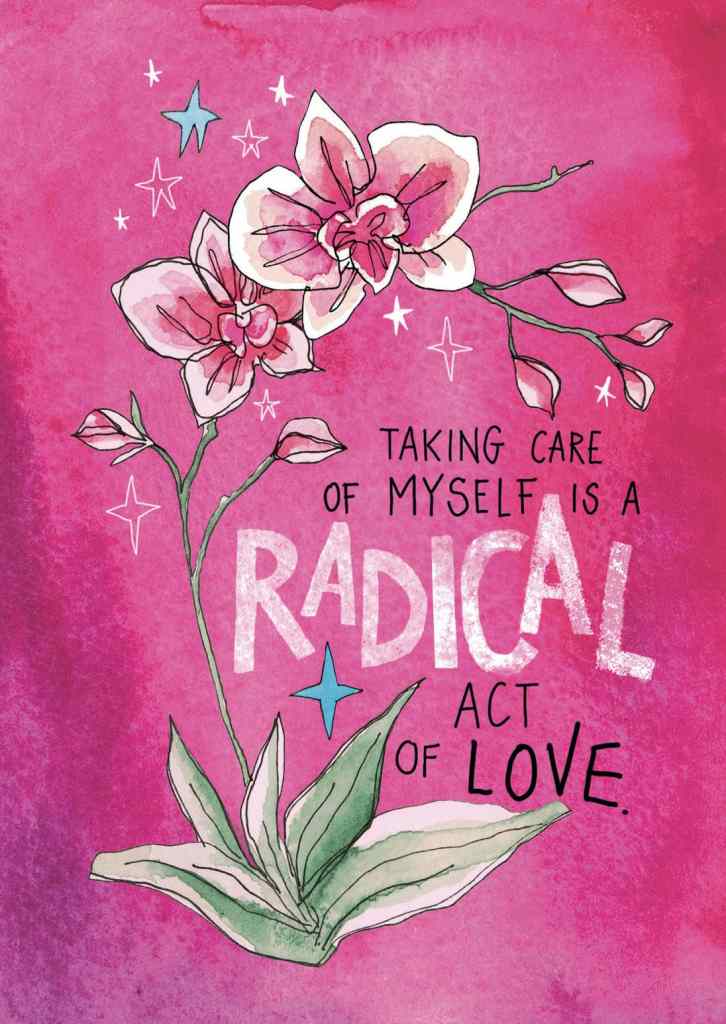
Taking care of myself is a radical act of love.

It is amazing that the concept of self-care came up this week. Self-care is so often portrayed as face masks and manicures. I’m all about those—don’t get me wrong—but I want to make it clear that more enduring, transformative self-care involves truly taking care of yourself, from the inside out. And of course, by self, I mean Self with a capital S—the kind of Self we talk about in IFS.

I love this section from Happy Days with a prayer for the Self:

Whenever I find myself disconnected from Self I say a prayer to Self. The same way I intuitively pray to God, Spirit, Angels or the Universe, I pray to Self. To me they are one in the same. An ever-present energy of love guiding my thoughts back to the present moment. Here are some examples of prayers to Self that have greatly benefited my life. 

I welcome Self to care for all of my parts. 

May Self-Energy support me in this moment.

May all parts be led by Self.

I surrender this extreme part to the care of Self.

I welcome Self to reorganize this for me.

May all parts feel love and accepted by Self.

Praying to Self is a divine practice of inviting Self-Energy into your consciousness to alchemize your triggered parts in the moment. Each time we turn to Self through prayer we strengthen our connection. These prayers offer all of your parts the chance to calm down and be cared for. 

– Happy Days

One of the most powerful kinds of self-care is to address the trauma and pain that’s holding you back from the life you deserve. I know it sounds intimidating, but healing is possible. (Believe me, I’m speaking from firsthand experience!)

Wishing you allllll the peace and healing.


Enhance your practice today with my

FREE MAGNETIC ENERGY MEDITATION

to supercharge your manifesting power

get more gabby
  • Dr. Richard (Dick) Schwartz developed Internal Family Systems (IFS) in response to his therapy clients’ descriptions of various parts within themselves. He noticed systemic patterns to the way these parts were organized across clients. He also found that when the clients’ parts felt safe and were allowed to relax, the clients would spontaneously experience the qualities of confidence, openness, and compassion that Dr. Schwartz came to call the Self. He found that when in that state of Self, clients would know how to heal their parts.
    A featured speaker for national professional organizations, Dr. Schwartz has published many books and more than 50 articles about IFS. Learn more here.
  • Triggers and addictive cycles are a massive topic, and Dick and I could have talked about this for literally hours. If you want more, I encourage you to visit the IFS website, where you can find more on Dick’s work. You can also check out my book Happy Days, which has a wealth of information about IFS therapy as well as other strategies to truly take care of your whole Self.
disclaimer

This podcast is intended to educate, inspire, and support you on your personal journey towards inner peace. I am not a psychologist or a medical doctor and do not offer any professional health or medical advice. If you are suffering from any psychological or medical conditions, please seek help from a qualified health professional.

dear gabby #144 Jun 19, 2023 emotional wellbeing

the therapy that changed my life: internal family systems big talk with dr. richard schwartz

Listen on:

The following podcast is a Dear Media production.

Hi there, Gabby here. This podcast is intended to educate, inspire, and support you on your personal journey towards inner peace. I'm not a psychologist or a medical doctor and do not offer any professional health or medical advice. If you are suffering from a psychological or medical condition, please seek help from a qualified health professional.

Do you want to connect with your Spirit Guides? I think it’s a lot easier than you think, my friend. We love spirit guides over here on Dear Gabby. And spirit guides are loving beings that guide us to learn valuable life lessons and return us to that sense of safety inside and guide us throughout our life.

And the more that you communicate with them, the more that you can access their infinite wisdom. It’s like any friendship. The more you pick up the phone and call that friend, the more they can give you. And so, you can actually pick up the phone. You know, make a big call to those guides today. You can connect with your guides right now by practicing my free spirit guides mediation.

You can download it now at DearGabby.com/spiritguides. The link will also be in the show notes. Get ready for that full-blown connection—a connection that can support you forever, that can guide your life, that can be one of the most powerful relationships you’ll ever establish.

In minutes, you’ll start to tap into their loving presence and connect to their guidance and support. And you might feel just warm or a tingling sensation or you might see signs and symbols throughout the day.

Download my free Spirit Guide Meditation today at DearGabby.com/spiritguides to connect with your guides now. Listen now to communicate with your spiritual support system and access their divine wisdom, love and protection. That’s DearGabby.com/spiritguides.

Hey there. Welcome to Dear Gabby. I'm your host, Gabby Bernstein, and if you landed here it is absolutely no accident. It means that you're ready to feel good and manifest a life beyond your wildest dreams. Let's get started.

Welcome back, my friends. Welcome back. I am so, so happy that you are here for today's episode because, for me personally, this is one of those shows that really is quite selfish. It's a show that I gained so much from personally, and it's with my guest, my friend, my teacher, my hero, Dr. Richard Schwartz.

Dick is the founder of Internal Family Systems—IFS. You've heard me talking about it a lot. I'm actually writing my 10th book about IFS, and it has completely transformed my life. I've been practicing this therapy for over a decade and have gone through the training, and now I'm writing about it and it has completely changed me on a very, very core level.

It has changed everything about me and my life. And so in the show today, you will hear Dick and I talking about IFS and really sharing what this incredible therapy has been designed to do, which is to really help people establish a connection to their inner world and to all the parts of who they are.

And IFS is one of those concepts that can maybe take a hot minute to get your head around. And so it's really, really valuable that not only are you gonna get this interview portion, but this Friday you're also going to get a bonus episode where Dick actually takes me through a demo of IFS.

So you're gonna wanna listen to this episode; do not miss this one. It's gonna take you through how this truly revolutionary therapy was discovered and how it has been really, really integral in helping people with addiction and traumas and just day-to-day triggers that run their life.

And so get excited and make sure, make sure to listen to this all the way through, and then show up on Friday for this bonus episode that is going to show you how it works.

And I've made myself the Guinea pig in the next bonus episode. That's just coming up Friday. So stick around for the miracles, listen to this all the way through, and then pay attention to the bonus episode coming your way. I love you guys. Enjoy this show as much as I did.

GABBY: I am gonna just jump right in. I have a lot of questions, but I'm probably not even gonna look at the doc because the last time I interviewed you, I was a super fan. I, I am still a super fan. I was a super fan and it was October 23rd, 2021. It's episode 19. You were in the teens.

DICK: Wow.

GABBY: You were on the top 20 list of who I was gonna bring onto this show.

And by the way, it was top five because I only had a handful of interviews before episode 20, so…

DICK: I'm very honored, yes.

GABBY: You're still number one, man. Okay. But what I find so beautiful about…

DICK: It’s mutual.

GABBY: It really is, I wanna acknowledge that Episode 19, I bring you on, that was actually our first time communicating in person.

I had been deeply touched. My life had been changed by Internal Family Systems Therapy. I, at the time, was kind of doing what I always do, which is just kind of coming out and shouting from the rooftops about the things that had served me, and that was our first encounter. Now, years later, I consider you to be one of my dear, dear friends.

DICK: Me as well.

GABBY: A very close friendship that is one that I cherish. And I feel like a 13-year-old hanging out, just like hanging out in the backyard. That's how much I love you. And it's a really interesting thing to have that experience of someone where you can have that level of connection so quickly.

And the only thing I can say is that that connection has been established because of your embodiment of what you call self energy.

DICK: Mm.

GABBY: Your clarity, your calm presence, your creativity, your ability to connect and as you say, self creates more self. Self builds up more self in others.

And so your presence of self, my friend, has had the beautiful experience for me of establishing more self in your presence. And I'll, I wanna start there.

DICK: Yeah, well, like I said earlier, it's mutual. I feel that self to self connection with you as well. And consider you also one of my close friends and really, really grateful to have you as a friend.

GABBY: Right back at you. And lemme just say to everybody listening to have this man on speed dial is probably one of the greatest gifts that a human could have.

So thank you for that. Now I got my gushing out of the way, and I wanna encourage my listeners to not only listen to this episode. But to also go back to episode 19 because that's where you begin the journey of sort of defining IFS.

And I'm gonna ask you on this interview to do things a little differently, I wanna get a little bit of input on how, if you're at a dinner party, Dick Schwartz is at dinner and he's with a bunch of strangers that don't know anything about the therapy world.

They have no idea who you are. They're in a whole other industry. Let's say that you're at dinner with a whole bunch of aquatic people or something, I dunno, something totally out there. And you're at dinner and you're having some salmon and hanging out and someone says, okay, well what kind of work do you do?

Tell me about this thing that someone said you started, this thing called IFS. What does that mean to you? What is that?

DICK: You know, I've been in that situation many times. And it's always kind of awkward cuz I don't wanna go into a whole intro lecture and if I just give a few lines, it sounds kind of hokey.

So I tend to lean on or move toward the side of, I developed this thing and it's a way of working with what I call parts of people. And for a lot of people that seems weird and, and so I kind of leave it there.

I don't really talk much more.

GABBY: So you let them do all the talking?

DICK: Yeah, I, I interview them at that point.

GABBY: Well, cuz that's your comfort zone. You like to interview people's parts.

DICK: Uh-huh, it might sound like humility, but it's more just, it's so awkward to try and describe it in a few sentences and have people change the subject right away. That's been the experience frequently.

GABBY: Yeah. I think that's an interesting concept because I think that when you start to talk about something that's totally the opposite of how we live and totally the opposite of the way we perceive ourselves, people's eyes can glaze over.

They check out, they become protective. Like, oh, that feels like too much. I, I don't know if I wanna go there.

DICK: Occasionally somebody will say, oh, that sounds really interesting. Tell me more. In which case, I will. But much of the time it's what you just said.

GABBY: Yeah. Do you wanna hear what I do?

Now that I'm your publicist, your pro bono publicist, and really on a mission to try to demystify this massive body of work that is extraordinary and has been so wildly popular in the therapeutic settings. I mean, people are laying down the doors and just lottery after lottery trying to get in, mainly therapists, right?

So this is a hugely popular amongst therapists because it's a tool that works. It's a practice. It's a model that my therapists used with me for a decade, and it works. Now I wanna introduce this to as many people as possible so that they too can find their way to an IFS therapist, or that they can start to identify these principles in their life, even casually, if possible.

That's my mission. Here's what I might say, Dick. So I'm at dinner with you and I might say to you, Dick Schwartz, you have no idea what IFS is. You know those times when you say, well, there's a part of me that's really frustrated whenever my husband speaks in a certain tone or there's a part of me that gets super, super activated at work when my boss tells me I'm wrong.

That's us speaking for these different parts of who we are. And inside of us, we have all of these different reactive ways of being and protection mechanisms. We might think of them as protection mechanisms. And in IFS, Dick Schwartz calls these protector parts. And what are these protector parts doing?

They're protecting us from feeling really young experiences—really, really difficult young experiences like maybe when we've experienced any kind of child abuse or neglect or had a traumatic event that wasn't resolved properly and we didn't have the resources to process those experiences at that young age, very quickly we build up all these protection mechanisms.

So if you felt like you were stupid in sixth grade, you started to show everybody how smart you are, and now you're this massive overachiever and you have a part of you that wants to prove yourself to the world. And so we just got these little parts inside of us and those parts are running our show, they're running our show, they're quite active.

And so then Dick Schwartz is at the dinner table. And I might say to Dick Schwartz, well, what can we do with these parts, Dick? Now that we're engaged in our conversation with our audience here.

DICK: Oh, okay. Well first of all, that's a much better elevator speech than I have, and I'll have to fly you into the next dinner party I have.

GABBY: You know that I love a dinner party with you. I will throw as many dinner parties for you as I can in my lifetime.

So we're at dinner and I'm like, okay, that's the parts. But Dick, how do we help these parts of us that are so triggered and activated all the time?

DICK: Yeah. Well, Part of why they are so triggered is because generally they're living in times in the past. They're frozen in trauma scenes or places where you got bad parenting and they live as if you're still five years old.

They still think you're very young and they need to protect you in the way they did back then. And so, one way to help them is to learn about where they're stuck and then help them leave that time so they can live with you in the present. And usually, at which point, they're willing to unload the feelings and beliefs they got back in those times—a process we call unburdening.

[AD BREAK]

Now for a quick ad break. We all move at a hundred miles per hour, constantly plugged in, moving fast, and it's just the world that we live in today. It's just moving super, super fast. And so, whether we're racing between work and taking our kids to a practice or we're dealing with what's happening in the world, or we're trying to keep our work going, or reducing stress—all these things that are happening around us, we need to find tangible ways to reduce stress.

And we need to be able to increase mindfulness and improve our overall wellbeing, and that, my friends, is where Calm comes in. Our mental health affects every single aspect of our lives, and it impacts how we think and how we feel and how we behave and, and making time to practice mindfulness is so essential and Calm makes it easy.

Simply put, Calm, helps you stress less, sleep more and live a happier, healthier life. And really, guys, who doesn't want that? Their guided meditations, sleep stories, relaxing music tracks and daily movement sessions are just designed to give you the tools to improve the way that you feel.

And it's a really perfect, quick reset. Truly. And Calm has fantastic meditations and I talk all the time about meditation and how it's had such a major impact on my personal life. And Calm makes it really easy. So even if you've never meditated before, you'll get the support you need to reduce stress, improve focus, and uplift your mood.

Everything you need to prioritize your mental health and wellness is on Calm. If you go to calm.com/deargabby, you'll get a special offer of 40% off a Calm premium subscription and new content is added every week. For listeners of the show, Calm is offering an exclusive offer of 40% off a Calm premium subscription calm.com/deargabby, so go to calm.com/deargabby for 40% off unlimited access to Calm’s entire library.

That's calm.com/deargabby.

Summer is finally here, my friends. It's here, and I'm lucky enough to be able to get a little time away to just unwind a bit. And I'm excited about these wonderful moments that I can have just to de-stress. And sometimes getting into that state of unwinding can be tough for me. I can notice like my sleep is out of whack or I'm just not totally relaxed.

So that's why I love Next Evo Naturals. The most clinically-studied CBD brand on the market, and that's why I know I can trust and get exactly the best. I am literally taking so much research to heart right now. I recently read a study that showed that most CBD labels are way off and some even contain only about 60% of what they actually claim.

And so I love this brand. This brand is legit. I am not gonna lie, I'm a little bit obsessed and I love their Stress CBD complex. They come in these gummies and they make it super easy cuz you can just enjoy this like little snack. And there you go. Sometimes I take them in the morning when I'm feeling a little anxious about what's happening or the day ahead and the stress CBD complex has been so helpful for me and they've got this ashwagandha in it, which you know, I love.

I love Ashwagandha and the smartsorb CBD is clinically proven to reduce stress by 70% and increased concentration by. 50%. Who doesn't want that? Seriously? And Next Evo is just the best. So it delivers four times better overall. CBD absorption. And this isn't me just saying this, people, this has been tested and proven in multiple clinical studies.

So if you're like me and you know what stress triggers in your life, why not make CBD a part of reaching your full potential with Next Evo naturals. Leave all that summer stress behind and upgrade your CBD.

Go to nextevo.com/gabby to get 20% off your first order of $40 or more. That's 20% off $40 or more nextevo.com/gabby.

[END AD BREAK]

GABBY: So Dick, how would you begin the process of getting to know these parts of you first? Right? Because we live in this place that you refer to as blended, right? And tell me if this is how you would say it, but we become the part in these different scenarios, so we become so blended with that part of us that we're not able to see in the moment.

That, I'll just speak for myself, that my 10-year-old part is running my business in moments that I get really flooded and out of control. So until later, maybe I'm living with a lot of awareness and I've practiced IFS, but maybe for years before this, I just would defend that and be like, well, that's how I am.

DICK: Yeah.

GABBY: So is that what you refer to as being blended with the part?

DICK: Yeah, especially these protectors feel like they do have to take over and so yeah, they blend with what we call the self. So, compassion and so on. There are eight of 'em, and that all gets obscured when you get triggered, like in your case, the part who feels like she has to run your business.

Cause uh, that's her job. It obscures all those C-word qualities and you're seeing the world through her eyes. And through her eyes, everybody's incompetent and she's gotta do it for everyone. I don't— I don't know if this is the belief that…

GABBY: Oh yeah, you're nailing it, babe.

You know her. We've talked to her before. You've met her. You've met her before. You've helped her out. Yes.

DICK: Yeah. And so she has to labor and labor and correct people and make sure they do their jobs and make sure you do your job and, and so it's a big strain. Because she is really not equipped for that level of responsibility.

She's generally, these parts are themselves quite young. They're like in family therapy, we would call them parentified children. They're like children who had to become the parent in the family cuz the parents had abdicated somehow and they're in over their heads, but they feel like they have to do it.

And so it's a big relief of those kinds of parts to find that there is somebody else who can handle things in a better way and that you aren't five years old, that you actually are an adult and can handle people much better than these parts.

GABBY: I'm gonna give a breakdown of the parts, okay? And I'm gonna just demystify this a bit. So these traumatic moments in childhood create what's called exiled parts. And these experiences, I'm gonna let you riff on each one. So we'll start with the exiles. The exiles have had these traumatic events, whether they be Big T or small T trauma. It doesn't have to be a child abuse to be an exiled experience, right?

Can you riff a little bit about the exile and then I'll go to the rest of the parts?

DICK: Yeah. And when you say create them, they exist. All these parts come into the world with us. Cause they're all valuable and my take is the way our minds are constructed is to have these parts so they can help us in life.

But when you said the exile is created in the sense that the part who, before it got hurt, was this playful, happy, loving, creative inner child now is the most sensitive part. So it gets hurt the most by these slings and arrows, and now it carries the burden of worthlessness or terror or emotional pain.

And now if it blends with you, you feel all that you felt back when it happened. And it's hard to function when that part blends. So most of us try to lock it away thinking we're just moving on from the memories and emotions of the experience, not realizing we're exiling parts of us simply because they got hurt and now we don't have access to any of that joy and freedom and love and creativity.

And we also feel a lot more delicate because so many things could trigger it. And if that part gets triggered, it'll blend again and would be awash in the pain or the shame. Or for me, the better metaphor is these flames of exiled emotion threaten to consume us. So then other parts are forced out of their naturally value of states to become protectors.

To keep those triggering events from happening or to get us away from the fire if an exile does get triggered.

GABBY: Okay, so just one point of clarification for me is, so we're born and we're in this childlike state, but we have these other parts that are there kind of ready if we need them? Is that how you would say it?

DICK: Yeah, sort of. It, it's more like infant researchers like Barry Braselton talk about five discrete states that infants rotate through.

And it may be that those are the parts that are online when you're born. And the others are dormant until their time comes. So when you have kids, you notice that you put to bed a compliant little two-year-old, and overnight that two-year-old, this part comes out that says no to everything.

GABBY: Right.

DICK: And, and then that, you know, different stages, different parts. If you haven't been traumatized come out on time and they start to do their jobs. So it's more like that for me.

GABBY: It's developmental, these parts. Yeah. Now, nevertheless, these children are supposed to have these experiences that are joyful and free, and that's where we would wanna be.

But life and parenting and attachment breach and all the experiences that we have as children rupture that presence of joy, that essence of love within us. And just to clarify, is an exile established? Has it been created, just to be super clear?

DICK: No. The, the role has been created. Okay. But the part itself preexisted then got hurt, then got exiled.

GABBY: So the innocent child part, preexisted it got hurt. Yes. Didn't have the processing of that hurt and became exiled. Got it. Okay, here we are. Carry on. Now we've got these flames from these exiled parts. Now thank you so much for just going so into this with me. And I know that it's a different way of communicating this, but it's important for me to make sure that my audience is tracking with us.

So, so we've got the experience where this part has been hurt. Now it's exiled because it doesn't wanna feel that hurt anymore and it now these other parts start to show up. To put out the flames of that exiled experience. And these other protector parts you refer to as managers and firefighters.

DICK: Yeah, so some of them try to preempt the triggering of the exiles.

So those we call the managers. So they're what other systems might call the ego. They're the parts that run your daily life. They're good at certain kinds of things, and they remind you of things you have to do during the day and they like your little one, maybe take over and actually run your company and so on.

But they're doing it in an effort to control the outside world so you don't get triggered. And also to please people so that you don't get triggered. They have the goal of making you look perfect maybe, or perform at a high level to counter the worthlessness or keep people at a certain distance so nobody gets close enough to trigger you.

All their protective efforts are preemptive. They're just trying to keep those exiles contained. It doesn't always work. The world breaks through those defenses. You get triggered and now it's a big emergency cuz parts of you think you're gonna die if you stay in that pain again, and you're pulled back into those scenes in the past.

And so, this other set of parts has been standing by waiting for that event of the exile’s flames and immediately goes into action to douse the flames with some substance or hit you higher than them distract you till they burn themselves out. And in contrast to the managers, these parts again cuz they come in at a different point in the sequence.

Managers are preemptive; firefighters react after the exile has been triggered. And so they tend to be very impulsive and they don't care about the collateral damage to your body or to your relationships. They just know they've gotta get you higher than those flames or away from them or you're gonna die, they think. So you call those firefighters.

So larger rubric is protectors. One set are managers. The other set are firefighters. And again, I wanna emphasize this isn't the nature of the parts. They're young, even though the big time managers are pretty young, but they get forced into these roles because of trauma.

GABBY: That's right. Okay. So the managers are with us day to day, and they're managing our feelings or managing the hurt so that the hurt doesn't come out from the exile. When that hurt does come out because of something super triggering, something that's super activating, the feelings from the hurt from the childhood—exiled—are so extreme that we go into firefighter parts, often known as addictive parts. Right?

Often the drug addicts, the cocaine addicts, it's funny, I would use your exact language. When I suffered, I've been in multiple forms of addiction throughout my life. Cocaine addiction, alcoholism, food addiction, but my first drug was love.

My extreme fear of being single a.k,.a being alone, I would describe it to my therapist as if I'm not in a relationship, I think I'll die. And so that was a codependent addiction firefighter.

DICK: Yeah. I had a version of that too. It was more, I don't, can't take care of myself, so I need somebody to take care of me.

And that belief that you're gonna die if you don't get that person or that substance or whatever it is, is really common among these firefighters. They really believe they're saving your life. It's sort of like real firefighters in the outside world will destroy the house to save it, you know?

So I was gonna say, in contrast to many addiction treatment programs that in a sense pit you against the addiction, we tend to honor the addictive parts for their service and their attempts to save your life. And then help them see they don't have to do that anymore because we can go to these exiles they're reacting to and heal them.

GABBY: Yeah.

[AD BREAK]

This show is sponsored by Better Help. I'm gonna tell you a little story. A few months ago, one of my friends came to me and he said, listen, I'm struggling with some issues with stress and anxiety, and they're having a lot of trouble finding someone that they could talk to. And immediately without any hesitation, without taking a beat, I said, have you tried Better Help?

Within the next 24 hours, he came back to me and had his first appointment on the books. He had this appointment ready to go with a licensed therapist, and it was matched perfectly for him. And this made me so happy because taking care of ourselves is essential—especially when it comes to showing up in our highest and best.

And in the case of my friend, I really helped him avoid some burnout. And I don't really have to say this because you all know I'm a huge advocate for therapy. But Better Help is the most strategic way to get a therapist that's right for you, and to find somebody that's gonna be affordable, all online, totally accessible, and also get that help fast.

And I think a lot of times people come with this preconceived notion of what therapy is and what it's for. I’m here to tell you can be for whatever you wanna make of it. And whether it's something you wanna do for learning positive coping skills, or setting boundaries or healing addiction or trauma—therapy is the answer.

So if you are even thinking of starting therapy, I urge you to give Better Help a try. Find more balance with Better Help. Visit Betterhelp.com/deargabby today and get 10% off your first month. That's Betterhelp.com/deargabby.

Obsessed. I am obsessed, obsessed, obsessed with Vegamour. People, I have been using this product for months and I'm freaking out. This morning I took a shower and I could not wait to use the Vegamour shampoo and conditioner because it is thickening. It cleans my scalp like no other, and it smells delicious.

These products are absolutely mind-blowing, and I'm just wanting you to feel my enthusiasm coming through the microphone because I was blown away. Blown away. My hair is so thick I didn't even have to blow dry it. This is really thrilling to me. I love these hair products and what I love most is that they're a fully vegan, plant-based, hair wellness brand that is on the mission to give everyone a healthier scalp and stronger, fuller-looking, more beautiful hair.

And Vegamour products are 100% cruelty-free and they never use toxic chemicals. And the thing is, is that sometimes when you go with these natural hair product brands, they just don't make your hair look that great. They feel a little bit dry or sometimes slimy.

That is not the case here, people. This product smells good. It works well, and my hair is so thick right now, and I just like literally, literally, literally wish I could just look at you and show you what my hair looks like at this moment. And so one of the products that I'm using also regularly is their grow hair serum.

And this serum is specifically designed to support and nurture hair follicles, which can lead to stronger, thicker, and healthier hair. Here's the deal. If you're someone like me who wants to support their hair growth, if you're a mama who has just gone through the postpartum period and you're losing your hair, if you're somebody who's just wanting to use a product that doesn't have any harsh chemicals or animal products, Vegamour is definitely worth checking out.

Give yourself the hair you never thought you could have with Vegamour. For a limited time. Dear Gabby. Listeners, get 20% off their first order by going to vegamour.com/gabby and use code Gabby at checkout. That's vegamour.com/gabby. Code Gabby to save 20% on your first order.

vegamour.com/gabby, code Gabby.

[END AD BREAK]

GABBY: I have to say from my firsthand experience working with my exiles and working with my parts in general and doing IFS therapy, I can now see my cocaine addict part, my codependent part, my food addict part with not only compassion and love, but also with gratitude.

DICK: Yeah.

GABBY: Because I can see how hard those parts were working to keep me safe from, in my case, memories that had been so extreme that I forgot them, that I dissociated from them.

DICK: That's beautiful. Thank you for sharing all that.

GABBY: Thank you for creating the model.

DICK: Once you get to those memories and the parts that are stuck with them and heal those parts, then these firefighters can relax.

GABBY: Yeah. Right, and I guess the message here is about safely getting to those memories, and that's where IFS comes in because in a typical IFS session, you or IFS therapist will interview the parts that are up in the moment, right? Whoever's in the room?

And through, and I'm gonna let you talk about that. But through curiosity and through a, the presence of a calm connection, hopefully in this, in a safe, therapeutic environment, these parts can start to reveal more information.

Feel seen. Feel heard. It's not dissimilar to how I have been lately communicating with my four year old.

DICK: Exactly.

GABBY: He's been activated by an experience that he then deflects by saying, I hate this person. I hate this person. I hate this person. And so when we're together in stillness and in a calm place, just become curious.

And my slight curiosity, he just starts spilling it, man. He just spills it, spills it, spills it, and he'll say, you said this and then this one did this, and I hate that person. And I'll just say, I see you. And I totally hear you. And when you're ready, I'm here to learn more about it. How can I support you?

What might you need? But not everybody grows up with Gabby Bernstein as their mom.

DICK: Right. And most of us relate to our kids when they act like our parts, the way we relate to those parts. Yes. So if our kid is angry and we don't like our own anger, or we're afraid of our own anger, then we're gonna try and get 'em to cut it out right away instead of staying in self like you did and getting curious and listening.

So, that's a big part of the work, is helping people as they go with compassion to these inner parts, they can do that to people who resemble those parts.

GABBY: Yeah, I've lived that. I've really lived that firsthand because the more I can care for the child parts within me, the easier it is for me to just be in that self energy for my son, which is the perfect segue into self.

This is the hope moment everybody. So we talked about all this chaos that's happening inside, extreme patterns, lots of fear and we all have within us what you call self and tell us about it. Tell us about self, what can self do to help us. Yeah. Well that was the big shocking discovery I made.

This is the 40 year anniversary of the model so, long time ago. Simply because I brought this systems family therapy framework to this inner world, and as I was trying to help parts as once I got hip to the fact parts aren't what they seem and they deserve to be listened to, I was trying to get people to actually have dialogues inside with these parts and respect them in the way you described with your son.

And I found that clients would have trouble doing that because they might suddenly get angry at the part or get afraid of it. And it reminded me of family sessions where I'm trying to have two family members talk to each other and a third member would interfere constantly.

And so, I began asking clients, could you find the one who's so afraid of this critic or is angry at the critic maybe if we're working with a critic, and ask it to just give us a little space so we can get to know it?

And clients would say, okay, they did, and now how do you feel toward it? And it would be a completely different answer. It would be great. It would be, I'm just kind of curious about why it calls me names or I even, I, I feel sorry for it.

And in that state, the critic would relax and would share its secret history of how it got into that role and how it's desperate to protect you. And my client's compassion would grow and we could learn about the parts it protected and heal those. And, and it was like in that state, my clients sort of knew how to do all that.

GABBY: Yeah.

DICK: Just like when you're in self, you know how to relate in a healing way to your son. And when I would do it with other clients that just that process of asking these interfering parts to give us a little room, give us a little space, it's like the same person would pop out with those same C-word qualities of calm and curiosity and confidence and compassion.

And then there are four others, clarity and creativity and connectedness and courage. So those are what we call the eight Cs of self-leadership. That's held up pretty well.

GABBY: Creativity? Yeah.

DICK: As the primary set of qualities for healing itself has, and it turns out 40 years later, thousands of people doing this now. Turns out that self is in everybody, can't be damaged, just beneath the surface of these people such that the parts open space and it pops out spontaneously. And knows how to heal. And that's the big deal about IFS.

GABBY: I wanna just read a quote that you said about the spontaneous connection to self.

This is one of my favorite Dick Schwartz quotes. I've got many of them in my toolbox.

“We all know about those luminous moments of clarity and balance in our lives and in those of our clients, which come briefly now and again. However we get there, we suddenly encounter a feeling of inner plentitude and open-heartedness to the world that wasn't there the moment before.

The incessant, nasty chatter inside our head ceases. We have a sense of calm, spaciousness as if our minds and hearts and souls have expanded and brightened. Sometimes these evanescent experiences come in a bright glow of peaceful certainty that everything in the universe is truly okay, and that includes us, you, and me individually in all our poor, struggling, imperfect humanity.

At other times, we may experience a wave of joyful connection with others that washes away irritation, distrust, and boredom. We feel that, for once, we truly are ourselves—our real selves—free of the inner cacophony that usually assaults us.”

DICK: Wow. I wrote that?

GABBY: You know those moments where like, who said that?

Well, you and your guides.

DICK: Yes. My guides had a big hand in that.

GABBY: All of the energy that pours through you. But yes, my friend, you wrote that and I remember reading that and being just taken aback because you defined in words what that means to me. The open-heartedness of being in self.

DICK: Yeah.

GABBY: So to go back to what we were saying before, when we're not blended in a part and we're not taken over by that need to manage or the extreme need to put out the fire, we're not activated in an exiled trigger.

We're in self.

DICK: Yes.

GABBY: Now, would you say that most of the time, people are not in self?

DICK: Yes. Most people are mostly blended with parts and think that that's their self. They think that's who they really are. So as we get those parts to open space, sometimes it's a big identity crisis. Cause people are shocked to learn that that's not who they are.

GABBY: Yeah. Maybe that's why at the dinner party people are like, no, Dick, I don't wanna talk about these parts of me because don't bring any attention to them. Let's not bring any attention inward.

DICK: Yeah. Yeah, and, and the idea that there are these little entities in us is very counter-cultural. This is a sort of mono mine culture, so that's challenging too.

GABBY: Yeah, and I think these days people are more aware or conscious or open to their traumatic experiences from their past, particularly those of us that are therapeutically or spiritually-inclined. So there's a deeper awareness, which is definitely helping the cause and helping IFS and the language.

DICK: Very much.

GABBY: Very much. Nevertheless, some people could say, oh yeah, I remember that thing that happened to me and that's created this behavior that's made me be like this. And anyone listening or anyone still listening to the end of this is definitely getting that.

Nevertheless, I think that these managers and protectors have worked so hard to maintain their control, that it's not easy to unblend from them, and that's where that curiosity and that inquiry comes in.

And you are the most masterful interviewer I've ever seen in my life when you're interviewing people's parts.

DICK: Thank you.

GABBY: So talk about that.

DICK: Yeah. Well, part of why I'm so effective these days is cuz I've done a lot of work on myself. The parts of me that I used to be blended with when I would do those interviews were parts that wanted to be impressive or wanted to have a big agenda about where we got to in the interview or…

So over time, I learned that they were getting in the way and I worked on myself to the point where generally now when I'd go to do something like this or a demo kind of thing, I just can tell that self is embodied. And when that's the case, people can sense that safety.

And so, when they sense that safety, their protectors start to relax a lot, and when their protectors relax a lot, their self emerges. And that's a big invitation to these parts that have been locked away for so long to get some help.

And so that's why we can often go pretty deep, pretty quickly.

GABBY: Yeah.

DICK: And for some people, their protectors need a lot, a lot of convincing. So I become a kind of hope merchant to the protectors. I'm selling the possibility of changing their roles if they are willing to let us heal what they protect.

But I'm not pushing it and I'm constantly refrained, as in: you're the boss. We're not going anywhere without your permission.

GABBY: Right.

DICK: Cuz many of these protectors have pretty good reasons to not wanna open that door, especially to somebody they're just meeting.

So, yeah, very respectful of the pace of protectors.

GABBY: I'm really proud of you for making the commitment in this lifetime to show up in this way. To be the vessel 40 years ago to say, yes, okay. There has to be a better way, which is, I believe, an unconscious prayer that came possibly through you. And then to be the humble, receptive channel to receive this information and to show up for it, and to be committed to it, and to be devoted to it, and to continue to develop it, share it, train it.

Two of your books are being re-released right now, but you have a lot of books and really proud of all of them. You just re-released the Introduction to Internal Family Systems in March. And then you also, You Are the One You've Been Waiting For is being re-released on May 9th. And you were awarded, Dick, the Lifetime Achievement Award at the Psychotherapy Network Symposium.

And you will go down in history as someone who changed the world. And I love you so much, and I'm very emotional right now because it's a really big deal for me to have someone I trust this much. So thank you so much for being a presence in so many people's lives that is, that your presence alone has the power to heal, and people just witnessing you or hearing you will experience that energy coming through.

DICK: Well, thank you so much for those beautiful words, Gabby. I love you too, and I'm so glad to have you on this journey with me. There were lots of lonely years where, uh, people at your level didn't get it at all.

I was lucky to have some people along the way that are still around. But yeah, just a thrill for me to have our relationship.

GABBY: Yeah. And I think that we're in a season when people need it more than ever, and where the openness to this way of living is much more possible than ever before. And so, I wanna really encourage the listeners, the people that are still listening and touched by this conversation, to not only go out and read the books, right? Go and read You Are the One You've Been Waiting For, the Introduction to Internal Family Systems Therapy and to give yourself the privilege and the opportunity to get to know this work more, to even go further and go to the IFS Institute and seek out an IFS therapist to educate yourself, but also to share the conversation we've had here today because this is a beautiful opportunity for people to open up to a new way of thinking and a new way of living.

And if there's one message that you'd leave people with, they've never heard about IFS, they're here for the first time, what can they do next? Of course, I wanted you to go read the books, but what would be one thing that they could start to do for their own inner system right now?

DICK: Yeah. I think the main thing is to start to reexamine their relationship with some of these parts that they've been fighting with all the time.

Cuz fighting with them really backfires. And if you just get curious, it's pretty simple actually. They'll reveal their protective intention and you can start a new compassionate relationship with them.

GABBY: Yeah. Check in with your parts and become curious about them and yeah.

Compassionate connection can start to set in.

DICK: Yeah. They're not what you've been taught that they are, they actually deserve a lot of appreciation and respect.

GABBY: Yeah. Yeah, you say there's no bad parts and all parts are welcome. It's a beautiful way to live, and I can't wait to continue our conversations for many, many years to come, and I am so behind you, my friend.

DICK: Yes.

GABBY: That support that you always looked for, you're starting to feel now coming effortlessly to you. I know that that's the case because you're in self and so that support is here. And I could keep gushing, so we should probably stop now.

Everybody should head over to the ifs-institute.com. But right now go and give yourself the gift of really listening to the Introduction to Internal Family Systems. And then this new version of You Are the One You've Been Waiting For. It's 40 years of, of transformational work, and you've revisited the text and you've brought more to it now that you have all this information.

And I'm excited for everybody to start their IFS journey now.

DICK: Thank you, Gabby. Always, always a pleasure.

If you made it to the end of this episode, that means you're truly committed to miracles. I'm really proud of you. If you wanna get more Gabby, tune in every Monday for a new episode.

Make sure to subscribe so you don't miss any of the guidance or special bonus episodes. Your experience at this show means a lot to me, so I really wanna welcome you to leave an honest review and you can follow me on social media at @GabbyBernstein.

And if you wanna get in on the action, sign up for a chance to be Dear Gabby’d live at deargabby.com. See you next week.

Please note that this episode may contain paid endorsements and advertisements for products and services. Individuals on the show may have a direct or indirect financial interest in products or services referred to in this episode.