
hero image emotional wellbeing

how to live a longer, happier life by achieving true wellness

“Joy is the ultimate wellness solution.” There’s your Dear Gabby truth bomb moment, right off the bat.

That line comes from Jason Wachob, who joined me for this inspiring Big Talk with his spouse, Colleen. Colleen and Jason are cofounders and co-CEOs of the highly influential wellness brand mindbodygreen. They are legends and OGs in the field, but they know the world isn’t getting it right when it comes to achieving wellness. Why? Because we aren’t including joy. We aren’t including human connection, spiritual connection, a sense of purpose, or even fun.  

Colleen and Jason are upending the current idea of wellness (and literally writing the books on it), and their insights may seriously enhance and extend your life.

how to find joy—and why you won’t find it in the current wellness movement

Just a few years ago, I was suffering from a host of maladies, including serious GI problems and constant discomfort. I was convinced that if I followed the right wellness trends, ate specific foods or spent enough time in the sauna, I’d finally feel better. I was sucked into the promises made by the wellness industry.

Guess what finally made me feel well for the first time in my life? Resolving my trauma.

When I did that, my gut problems disappeared. I felt free. I felt alive. My relationships improved. I felt like joy was within reach. I felt well. I’m not a doctor and I am a fan of medical treatment, including medication, when needed. (I am vocal about taking anti-anxiety medication and am so grateful for my doctors.) But in my case, I believe that no amount of supplements or sauna time or even doctor’s visits would have fixed what was wrong with me. I needed to heal the unresolved burdens that my body was holding onto.

We’ve been tricked into believing that wellness can be achieved with flat tummy tea or a booty-lifting weight routine. To be fair, body movement and nutrition (real nutrition, not fad diets) are important. Jason and Colleen are huge advocates for both. But they also recognize that diet and exercise are only part of a much bigger picture.

This episode sheds light on that picture, along with real strategies to get you started.

why lack of joy and connection can be dangerous

If you search “wellness” on social media, you’ll be hit with what Colleen calls “bro-centric body optimization protocols” and loads of people selling special teas and diet plans. You’ll also see people claiming to be able to help you live longer. Life extension has been a major element of the wellness industry, and Jason and Colleen are the first to state that being mobile and staving off disease are essential parts of extending your life. But Jason makes a majorly valid point:

what’s the point of living to 100 or longer if you don’t have friends, if you can’t find  joy?

We’re in the middle of not just a mental health crisis, but also a loneliness epidemic. Research from BYU suggests that loneliness is as dangerous as smoking 15 cigarettes a day in terms of increasing the risk of premature death.

Instead of only focusing on increasing our lifespan, Colleen and Jason are committed to helping people extend what they call a joyspan. I love that concept so much.

in this episode, you’ll learn:
  • Why we have such a hard time creating connections right now, and what to do about it
  • How to create connections based on your personality type
  • Whether digital connections are as valuable as IRL connections
  • How to find joy even when you’re facing depression or other struggles
  • How to become the CEO of your own well-being

I’m so excited about what Colleen and Jason are doing, and I think this episode is important for anyone who feels like they put a ton of pressure on themselves to pursue wellness but still feel stuck. I got a ton out of it, and I know you will too!

weekly card reading
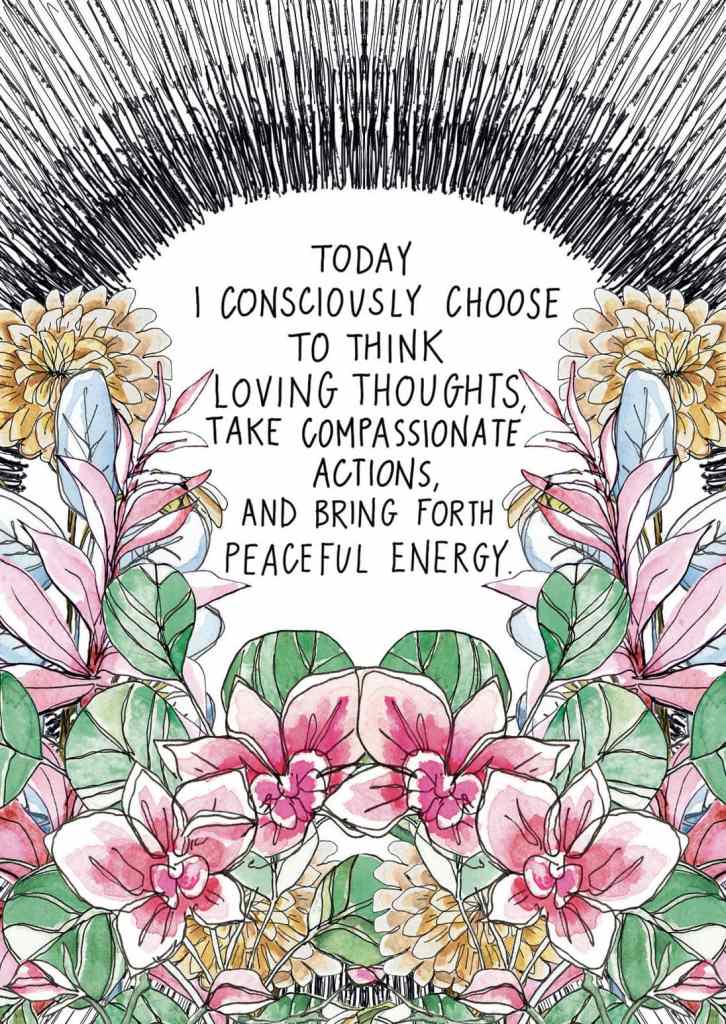
Today I consciously choose to think loving thoughts, take compassionate actions, and bring forth peaceful energy.

This is a great card for this topic. Just like one bicep curl won’t give you ripped arms, one single moment of pursuing a more joyful, connected life won’t get you where you want to be. To feel good consistently, you have to make it a practice. Devoting your days to your inner life will bring you joy. Stay consistent with your conscious contact to the Universe and you will be set free.

get more gabby

free manifesting meditation to attract your desires

By submitting your number, you agree to receive recurring automated promotional marketing text messages from Dear Gabby, Inc. and Gabby Plus, Inc. at the cell number you entered above. Consent is not a condition of any purchase. Reply HELP for help and STOP to cancel. Msg frequency varies. Msg and data rates may apply. You also agree to our Terms & Privacy Policy.

  • The Joy of Well-Being: A Practical Guide to a Happy, Healthy, and Long Life  by Colleen and Jason Wachob
  • Jason Wachob is the cofounder and co-CEO of mindbodygreen, the leading independent media brand dedicated to well-being, with 15 million monthly unique visitors. He is also the host of the popular mindbodygreen podcast and the bestselling author of Wellth: How I Learned to Build a Life, Not a Resume. He has been featured in the New York Times, Entrepreneur, Forbes, FastCompany, Business Insider, BoF, and Vogue, and has a BA in history from Columbia University, where he played varsity basketball for four years. He lives with his wife, cofounder and co-CEO Colleen, in Miami with their daughters, Ellie and Grace. In his spare time he loves walking to get hot black coffee. You can find him on Instagram at @jasonwachob.
  • Colleen Wachob is the cofounder and co-CEO at mindbodygreen, the leading independent media brand dedicated to well-being, with 15 million monthly unique visitors. She lives in Miami, Florida, with her husband, mindbodygreen cofounder and co-CEO Jason Wachob, and their two girls, Ellie and Grace. She graduated from Stanford University with degrees in international relations and Spanish. She spent 10 years working at Fortune 500 companies, including Gap, Walmart and Amazon, before devoting her life’s work to mindbodygreen. Colleen has been a speaker at Fortune 500 companies and numerous trade conferences on well-being trends. Her new passion that brings her joy is pickleball. You can find her on Instagram at @colleenwachob
disclaimer

This podcast is intended to educate, inspire, and support you on your personal journey towards inner peace. I am not a psychologist or a medical doctor and do not offer any professional health or medical advice. If you are suffering from any psychological or medical conditions, please seek help from a qualified health professional.

dear gabby #154 Jul 31, 2023 emotional wellbeing

what the wellness industry got wrong

Listen on:

The following podcast is a Dear Media production.

GABBY: Hi there, Gabby here. This podcast is intended to educate, inspire, and support you on your personal journey towards inner peace. I'm not a psychologist or a medical doctor and do not offer any professional health or medical advice. If you are suffering from a psychological or medical condition, please seek help from a qualified health professional.

Before we even dive into today's episode, and it's a big episode today, I want to give you a little inside tip that will come in handy, especially after you listen to today's show. You've heard me say it over and over and over again. This is my mantra. The path to inner peace is through meditation. Period.

Period. End of story. I literally do not go a day without meditating. I've been on this journey for 17 and a half years. Frankly, I've been meditating pretty much most of my life as a child and have had a daily devotional practice for 17 and a half years. And when it comes to manifesting, well, there's simply no greater tool to support you on that journey.

That's why I'm going to give you my most powerful guided manifesting meditation for free, totally for free. You can use this alongside all the other tools and techniques that I talk about on this show, and particularly in this episode. So all you have to do is go to DearGabby.com/manifest and download this truly transformational meditation to help yourself begin to manifest a life beyond your wildest dreams.

This meditation will greatly complement today's episode. So I highly recommend that after listening to this episode, you go to DearGabby.com/manifest and download that meditation, practice it. Maybe even practice it for the next 30 days. See what transpires. Leave me a review and tell me about the miracles.

You will thank me later.

Listen up my friends, over the years I've taken more supplements than you could possibly imagine. It was maddening. So when I was introduced to AG1, I was freaking out. I was totally blown away that I could have it all in one. Literally, all in one. AG1 is an all in one nutritional supplement that supports gut health, supports my immune system, and it gives me energy.

And to top it all off, it tastes delicious. And if you want to take ownership of your health, try AG1 and get a free one year supply of vitamin D and five free travel packs with your first purchase. Go to drinkag1.com/gabby. That's drinkag1.com/gabby. Check it out.

Hey there. Welcome to Dear Gabby. I'm your host, Gabby Bernstein. And if you landed here, it is absolutely no accident. It means that you're ready to feel good and manifest a life beyond your wildest dreams. Let's get started.

GABBY: Welcome back, everybody. Welcome back to Dear Gabby. Today's a cool episode because I'm in conversation, big talk conversation with some of my longtime friends. Friends that were like old school wellness warriors with me, like, were pushing 20 years ago guys, like before gluten free was cool and like before everybody was doing yoga and going into their general store to get a green juice.

Like it was way before wellness was trendy. And these folks, Jason and Colleen Wachob, the founders of the highly influential wellness brand MindBodyGreen. They were my friends back in the day and we created our brands together and really navigated this conversation around wellness and spirituality from the get-go.

This new zeitgeist was something that we were at the forefront of. And in fact, I was their first ever interview and their first ever video interview. He would set up this random camera like nobody had phone cameras at this time and he would just shoot me from wherever we were. It was so funny and it's back in the day and it was really, really old school.

And so on this episode, you've got the legends in this wellness space. They're just, they understand what it means to achieve wellness and not just follow a trend. Within the wellness space, there's like a lot of talk about longevity and we all want to live healthy, long-lasting lives. So Jason and Colleen and I just, just jump in to discuss that it's great to be physically healthy and mentally stable, but what is the point if you're not enjoying your life?

So instead of focusing on just increasing our lifespan, we talk a lot about how we can increase our joy span, which is what they've coined this phrase, joy span. And I'm telling you people, this big talk is beautiful. You're going to love it.

This episode is for all of us. Anyone who feels like we put a lot of pressure on ourselves to pursue our idyllic sense of wellness and just ultimately, we feel kind of stuck and unable to achieve it, but today's episode is going to really show you how.

And there's a lot to take from this episode, so listen to the conversation all the way to the end, and maybe even jot down a few ideas in your journal, anything that resonates with you, just sit with it, think about it, and let these messages be reminders to yourself.

And know, in no uncertain terms, that this could very possibly be an episode that could change your life. And I'd love to hear what changes you think you can make and how it's going to make a difference in your life. So you can leave that in the reviews. I'm going to sometimes come on and read your reviews live here.

Sit back, enjoy this show. Let's bust the myths of some of the trends in the wellness industry and really own what it means to live joyfully and how joy is the ultimate creator for our overall well being and our happiness.

GABBY: Okay guys, so let's just begin with my claim to fame.

[LAUGHTER]

My freaking claim to fame is that I was the first ever interview, video and audio, video and written word on MindBodyGreen. Wow. Take that, wellness industry.

JASON: So. I mean, go even further and remind people that this is when you didn't do videos on your phone.

So I had a flip cam and if you recall, I wasn't very good at editing. So we had to do it in one take. I would put the camera on and then quickly pivot and we would have to do it in one take.

GABBY: I remember that. I remember the one take. Or then we'd edit it ourselves in iMovie.

JASON: Oh, I wouldn't even go that far. I could just, I knew how to edit the beginning and the end.

GABBY: Yeah. So we are really old school. We are really old school. We didn't even have Facebook or Instagram, nothing. We were just telling people on the street in the yoga class, it's kind of my favorite. It really is one of my favorite things to get together with you guys. Just to be like, yeah, we've really seen a lot happen and I feel like that's a big part of what I want to talk about today with you is the fact that we kind of have this camaraderie around being at the beginning stages of this zeitgeist, of this wellness conversation, spiritual conversation.

It's not that it hadn't been happening for decades in terms of spirituality and well being, but in terms of it becoming democratized and a broader message. And so therefore, we've been sort of at the forefront of this evolution of the conversation. And I see you guys as these major experts in the wellness industry with your fingers to the pulse of what's hot and sexy right now, what's happening next.

And I want to hear from you. You know, where do you think we're at right now? Like, what are the big trends that I, Gabby Bernstein, need to know about for the future of the wellness industry?

JASON: So I'll start with this concept of joy, which happens to work its way in the title of our book.

It is a part of our why and my why, as it relates to the conversation on longevity. Longevity has become a passion of mine since I was in my thirties, wasn't really thinking about longevity and fast forward to um, age 48, having two little girls, it's at the forefront. I have a terrible track record of my family here.

My father died of heart disease at 47 and my two other grandfathers died early, one from heart disease at 49 and the other of cancer at 44. And so where we've seen this conversation advance so much in the 14 plus years is around longevity. This idea of extending lifespan.

I would say lifespan is the 1.0. Let's get you to 100. I think modern medicine's been good at once faced with disease, extending life, but who wants to have a long life if your quality of life is really suffering? So the 2.0 is this idea of health span where you're extending life absent of disease. You're healthy, you're fit, you're mobile, and I think that's pretty good.

I would sign up for that, but we want to take it a step further, and this comes back to where we think the future is, this idea of joy span. What's the point of living to age 100 and being fit, mobile, and healthy if you don't have friends, if you don't have joy? I think that's something that's really important to us.

I think, you know, if we look at the mental health epidemic, I think of the loneliness epidemic. One in seven men don't have a single friend. One in ten women don't have a single friend. Or 25% of those under 30 are lonely. There's a loneliness epidemic. It is their dire health consequences. There's a great researcher out of BYU is equated being lonely with the equivalent of smoking 15 cigarettes a day in terms of premature mortality.

And it's twice as bad as having six drinks a day. That's 42 drinks a week, three times as bad as being physically. Inactive and four times worse is being obese. So if we take a step back and like our why right now and where we think things are going is look, we've come so far with the science around longevity, but we really need to focus on connection, on spirituality, on purpose, on joy as the health consequences are dire.

Let's have fun. Let's, let's have great connection.

COLLEEN: Yeah, I think we have a very complicated relationship with the word wellness, and there's never been more wellness right now, but also by all objective markers, and Jason alluded to a lot of them, we're not really well right now. I think less than 12% of people responded that they would classify themselves as very happy, which is the lowest that, that study's been in the years in which they've done it.

So, while we all live in this algorithm in which we see so much wellness, Jason and I look at a lot of the culture right now, and we're like, we can't even fit this into our own lives, whether it's the bro-centric optimization protocols and regimens. And then on the other hand, you have, you know, a lot of what we call Kardashian wellness, where it's a lot of stuff that if you have the resources and the time for it, fantastic.

GABBY: Yep.

COLLEEN: It's not really amenable to the life stage that we're at. So if we think of wellness, it's a lot of optimization. It's a lot of protocols and regimen. And we intentionally called the book, the joy of wellbeing, because we want to shift the conversation, have it be more about the journey integration and things that are actually able to be integrated into your life to create more abundance.

GABBY: There's two things I want to say to what you guys said. First of all, amen, beautiful, because you're right. I can even think back to the times in my life when I wasn't in joy and I was really plagued with unresolved burdens and disturbances and was doing everything I could therapeutically at the time to get to a better place, but was really looking to a lot of the wellness world and industry to save me, right?

Like if I just eat this way, I'll feel better or if I take this many saunas, I'll feel better or if I'm truly… What really the real answer was if I heal my trauma, I'll feel better. And so, all my gut issues are gone because I've healed the core wound and so I think that the joy is the ultimate wellness solution.

JASON: Yes. And look, we still believe that nutrition and exercise are foundational. You need to eat well, you need to move, you need to do some resistance training. We believe all of that. However, I think most people understand if they're not doing that. You know, I know if I'm really eating as well as I could be, having too much sugar, not moving, too sedentary.

But to your point, I think most people have a little bit more difficulty assessing, how am I doing it on my emotional health right now?

GABBY: Yes. And thankfully, there's a much, much, much stronger conversation around it. And in the same breath, there's far less connection than ever before. And I think back to where we were 18 years ago when we first had that interview.

I was in my 20s, you were 30. And we just had this great vision, and I think the biggest vision we both had was creating community. And I always joke around that I started giving talks at the Gay, Lesbian, Transgender Center across the street from my 13th Street apartment. I gave these talks, and I set up the chairs, and I did it because I just wanted friends.

I wanted some spiritual friends. And I think that connection piece that you both have brought up here is so important to address because you've built community online, right? And, and of course, we had all these opportunities to be in, be in connection to others, but for that, those horrific glaring statistics around the loneliness epidemic, what do you guys think?

And what do you suggest in the book are directions that we can take and actions that we can take to create more connection in such a digital world?

JASON: So we have a couple thoughts. One, I want to say that this is an area where just men are flat out terrible. We're much worse than our female counterparts.

We lose touch more easily. We tend to, if we're in a relationship, we tend to take on the friends of our partner. And we're just not good communicators. And this is one, personally, I've been terrible at. I had a great group of friends post playing basketball Columbia. We were all in New York and went out all the time.

We probably did a lot of things we shouldn't have done, but we had a great time. That community was real. And then come thirties work and then marriage and then kids that faded and I'm terrible at staying in touch. However, with all that said, I do think the beauty of technology is that it makes it a lot easier to reach back out. If we had to go back in time, it would be a lot more difficult.

You have to pick up the phone. You'd have to dial. There would be that silence. Who is this? Now it's a text message. It's a DM. Hey, so and so. It's been quite some time. Been thinking of you because of X, Y and Z. How are you miss hanging out? Let's reconnect. I think most people will be pleasantly surprised by the response.

And you also understand that appetite for reconnection with the response or lack of response. And so, that's one thing I've incorporated for those who have lost touch that is less anxiety-inducing.

COLLEEN: And I think we have to be careful not to conflate digital community with IRL community because the experiences have very different impacts on the brain, on our levels of oxytocin.

And I find the digital community at times to be somewhat exhausting. You're bombarded. You walk into this room and it's like, oh, wow. There's lots of angry people here. I wasn't anticipating that the type of things you wouldn't have and that it almost exhausts you to a point where you don't have the energy and aptitude for an IRL community, but the impact on our brain and our relationships are so different between a digital community and IRL community.

And I found that we have to be intentional about cultivating an IRL community. And we talked a little bit before we started about how we just moved to Miami, and it's one of those narrow windows in time when you make such a big life change that we were so intentional about creating community. And I think for many of us, we have to move outside our comfort zones, find groups of people where maybe there's shared interests.

A lot of community for me has evolved among parents who are at similar life stages of people. We share our passions for wellness, and then it's about putting yourselves in those slightly uncomfortable positions of asking someone out on the first date.

I read a recent Wall Street Journal article about how people are treating their IRL kind of friendships, realizing the transformative impact that it can have on their own health and wellbeing and applying the same rigor that they would to their business of like, let's have a KPI of meeting, you know, IRL with someone.

I do think we have to have a certain level of intention about this because if you just let it be in the same way when you were, you know, in college and you magically in that first freshman year made friends, like, unfortunately, the same thing doesn't happen in the modern world.

GABBY: Yeah, no, you are so right about that.

I'm actually an extreme extrovert and my husband's an extreme introvert. So he definitely falls into the category of like the husband that has created great friendships through my direction and a bit of my son as well. Like sometimes my son will be at the beach and he'll be like, mommy, can we go make friends with that person?

You know, because he knows I'll just like walk over and be like, you play with Oliver. But I think that also knowing your personality type. So if you are an introvert, knowing that you may not do that well at a big party. But maybe you meet that other father at drop off or whatever, and you're like, Hey, do you want to play tennis today?

Or do you want to have a coffee or just start chatting directly? Whereas if you're an extrovert, you know that you get filled up in those situations. My husband has this great philosophy that the introverts, when they go to a party and they've got five coins, and the extrovert has five coins. And when the introvert shows up at the party, they go home with negative five coins.

And the extrovert shows up and they're like millionaires when they leave, you know? Because we just get so filled up from that connection. So I think that when you talk about connection in real life, IRL, it's almost important to first and foremost assess where am I and how do I like to connect and what's a safe way for me to connect.

But to also to your point, Colleen, take connections so seriously because, you know, create some KPIs around your connection because if we don't, we can easily fall into the trap of just Netflixing and Instagram friending and just not actually connecting.

[AD BREAK]

Now for a quick ad break, there is no doubt about this. Life is stressful, super stressful. And whether that stress is about work or family or the world, it really doesn't matter because regardless, It can be really overwhelming. Period. Period. I'm just giving voice to it now. So it's really essential for us to find ways to reduce stress and to increase mindfulness and to improve our overall well being.

And what I've found is Calm. Calm helps to stress less, sleep more and live a happier, healthier life. Their guided meditations, sleep stories, relaxing music tracks, and daily movement sessions are all easy to access and designed to give you the tools to improve the way you feel. And for me personally, there are times when I just need to wind down and clear my mind.

So I put on one of Calm's relaxing music tracks, lay down on the couch, and just chill. And it's just the perfect reset. Their meditations range in focus from anxiety to stress to self-care to inner peace, and they even have expert-led topics such as tips for overcoming stress, anxiety, handling grief, improving self-esteem, caring for your relationships and more.

And everything you need to prioritize your mental health and wellness is in the Calm app. So for listeners of this show, Calm is offering an exclusive offer of 40% off a Calm premium subscription at calm.com/deargabby. Go to calm.com/DearGabby for 40% off unlimited access to Calm's entire library.

That's calm.com/deargabby

This show is sponsored by BetterHelp. There are certain things in my life that I know to be true. And showing up for myself and being the best version of me is my highest priority. Because without that, I really can't show up for all the things in my life that I need to show up for.

My family, my friends, my work. But getting there is not easy and therapy is what helped me the most, the absolute most. And working with a therapist can really help you get closer to being the best version of yourself and deepening that self awareness and understanding. And I can say without hesitation that I would not be who I am today without my commitment to therapy. I know that just the mere thought of finding a therapist can also be super daunting and overwhelming. So if you're thinking about therapy, I want you to give BetterHelp a try. Because BetterHelp quickly and easily connects you with a licensed therapist who can take you on that journey of self-discovery from wherever you are.

And it's convenient, it's flexible, it's affordable. It's entirely online and you have the option of doing your sessions on the phone or on video and it can fit inside your schedule which is just beautiful. All you have to do to get started is just fill out a brief questionnaire and BetterHelp will match you with a licensed therapist.

They're going to pair you up and I want you to know what's really great about this is that you can switch therapists at any time for no additional charge. Let therapy be your map with BetterHelp. Visit betterhelp.com/deargabby today to get 10% off your first month. That's betterhelp.com/deargabby.

[END AD BREAK]

JASON: You mentioned the dreaded show up to a party. You don't know anyone, what to do. And there's a great tip from Gretchen Rubin I love in this situation where we've all been there. You show up and there's these buckets of people and they're talking and you're like, I don't know anyone, where do I go?

Well, you go, you show up to a group and you say, Hey, everyone. I don't know a single person here, but you guys look like you're really nice and having an awesome conversation. So I'm going to join.

GABBY: Yeah. Well, that's a great piece of advice for you, for me, for anyone who even has like the slightest extrovert. But if you said that to my husband, he'd be like, F you. One thing I always tell people that are really introverted is ask other people questions about themselves because extroverts just want to talk about themselves all the time.

So just go find the person in the room that like seems to want to talk about themselves and just ask them lots of questions and maybe you'll get some cool information about them. Because introverts just want to have deep and meaningful conversations, right? Extroverts want to touch, talk everybody. Just maximize the conversations.

But yes, I do like that. Like outing it a bit, right? It's like, I don't know anyone here what's going on, but again, I do think that would be a very extreme suggestion to an introvert.

Now, longevity. What else do we need to know about longevity? I'm 43. I met you when I was 28, you know, I have a lot more wrinkles and I want to know what to do.

How can I support my longevity? What's the plan here, guys?

COLLEEN: I think in general, we want to shift the conversation to be more about the fundamentals. How do we concentrate more on baking the cake than putting on the actual frosting? And don't get me wrong, we love the frosting. We sleep on an eight sleep.

You know, we have elements of our life that are, are high frosting, but we're just not…

GABBY: What’s an eight sleep, Colleen? Back it up.

JASON: It's one of the cooling mattresses.

GABBY: I have one too.

JASON: I have the chilly. I'm wearing a whoop and an aura ring. I just had like 30 vials of blood taken today for Frank Lipman. So we do some of that stuff, but it is.

GABBY: Well, you better, you better drink the, you know, drink the juice and walk your talk, right?

COLLEEN: Absolutely. But there's so many people within wellness, and then there's this whole other world outside of the wellness algorithm where this stuff is still brand new information. And those are the people that we want to bring inside the metaphorical church.

So, you know, we start the book with this idea of breath because it is so fundamental. And what's the knock with health and well being? I don't have the time. I don't have the money. Breath is something so fundamental and one of the reasons we started with it is when I had my pulmonary embolism in my early thirties, it was the first time that I thought about my breath and a pulmonary embolism is showers of clots in your lungs in my case, that I had gotten from being on the birth control pill after 10 years and having a very scary kind of health event, which is unfortunately far more common than most people understand and realize.

But it was a moment in time when I was unable to breathe when I would be fighting a woman or eyeing an empty chair on the subway and trying not to make eye contact with a senior citizens that I could score that empty seat that I really started thinking about my breath. And as someone who runs high on anxiety, you know, what's so wonderful about learning how to breathe is that you can actually activate your rest and digest system and not the fight or flight and I run high anxiety.

So just being in this calmer state is such has so many great benefits for your health outside of, you know, all the wonderful immune and filtration benefits. So you're doing it 17,000 times a day. Half the population is doing it all wrong. If you're looking for the easiest place to start, start with nostril breathing.

It's such an easy place to make an impact on your health and wellbeing.

GABBY: When you say nostril, just breathing out of your nose.

JASON: Yeah. Cause half the population is mouth breathing. It's bad for anxiety. It's bad for your immune system. It's just not optimized. And again, the major objection to health and wellness is I don't have the time. I don't have resources.

And this is something you're doing all day, every day in order to survive. And it's a high leverage opportunity. It helps with anxiety. It helps with sleep. It helps with your cardiovascular health, kind of everything. So like, let's start here. It is zero cost, very efficient.

GABBY: When you're breathing through your nose, which I've trained myself to do, is it that we're stimulating the vagus nerve when we breathe through our nose? And that's what causes—

JASON: Yes, all the above. So it's filtering, the bacteria increases co2 tolerance.

GABBY: Less likely to pick up disease and yeah, cause you're breathing through your mouth at the gym or something, breathe through your nose at the gym. So you don't pick up all the bacteria out there.

JASON: A hundred percent and anxiety and sleep are big ones.

And you know, if we think about 33% of Americans aren’t sleeping, this is a high leverage opportunity.

GABBY: I woke up at four o'clock in the morning with anxiety, just. I mean, just simply just too much going on in this season of time where I have to show up for a lot. I woke up with some anxiety and I did this breath practice of just breathing in two strokes through my nose and one out through my mouth.

I think I learned it from Andrew Huberman's podcast. And it's like this. It's. [TAKES BREATHS]

And it always puts me back to sleep.

JASON: Yeah. And the key there too, you always have to hold the exhale longer.

GABBY: Oh, thank you for that. Hold it out or just extend it?

JASON: Hold it longer. So if you're doing the two and then the one, two inhale, one exhale, make sure that the one is always longer than the two.

Because if it's the relationship is inverse, it may actually get you a little worked up.

GABBY: Right. So. [TAKES BREATHS]

JASON: Perfect. Even though we don't like that word.

GABBY: I like the word perfect. You can call me perfect all day, I don't f*ing care. I'm just kidding. I think actually my imperfection is my secret sauce. My willingness to be imperfect. So you guys wrote this book together.

JASON: Yep.

GABBY: Now, how did that play out in your marriage?

COLLEEN: We've been doing this dance together for a long time, a long time. Like a long time. Yeah. And over a decade.

And I always put out the PSA. It's not for everyone. And I think within health and wellness, there is so much passion about the work that people do that a lot of times it does bring in a partner. For us, it's the dance we've known and it works well for us in that we've always had this kind of shared understanding of the values of MindBodyGreen which are the values of, you know, the joy of wellbeing.

So there's never really been any debate on that front of, ooh, what should our POV on sleep be? We're always so aligned on these fundamentals, which honestly haven't changed that much since the birth of MindBodyGreen. It's now more about getting them to the forefront of the conversation.

And how do we spend more time talking about the fundamentals? So the dance of, of working together works for us, but I think it's about, you know, kind of knowing where each other's strengths are and making sure to carve out time to have the community that we need outside of work too.

JASON: But we, we, yeah.

GABBY: Hell yeah. Yeah, go ahead.

JASON: But we do differ, you know, this idea, we're very passionate about this idea of getting people 80% there. We do think the science is there that if you're lacking time and resources, we can get you like 80% there. The 20% is going to require a little bit more effort, time and possibly resources and not for everybody.

I'm more in the, I want to get to a hundred percent camp. And so. Again, I'm wearing the Whoop, Aura, did 30 vials of blood this morning, I've done 23 and me. I do all sorts of crazy testing just because I find it interesting and I like learning.

GABBY: You've also outlived a lot of the men in your family, right?

JASON: Yes. And part of it's through this testing.

Colleen, on the other hand, wants no part of it, which I understand.

COLLEEN: Yeah. And I think the hardest thing is understanding what your body needs and taking the responsibility of, we use a language in the joy of wellbeing, but you being the CEO of your own health and wellbeing, like you're going to have the best symphony of doctors, of healers, of practitioners, but at the end of the day, you need to know what's best for your own health and wellbeing.

And it's a simple example, having an alarm clock, for instance, in a room can create sleep anxiety as someone who has struggled with sleep anxiety over the years. I'm not gonna put an alarm clock in my room, but it's understanding these things and what impact is it going to have on your own health and well being.

Having too much information—and I'm not saying not to have the fundamentals covered. You do need to do that stuff. But having too much information to me, I just get diminishing returns and it doesn't bring me joy. But then there's other people like Jason who enjoy the optimization. And I think you need to understand how you're wired and what you need to understand if this is truly bringing you joy or if you're just doing it because you think you should.

GABBY: Yeah. And most people out there don't have the resources that we have, the privileges that we have, because you guys, myself, we can call up Frank Lipman and say, run my bloods, and most people don't have those resources. So it's really checking in with your nervous system resources, being able to say, okay, well, maybe I don't have access to like the, you know, massive amount of blood work that, that Jason does, but I do have access to the awareness of my nervous system.

And so, that's far more important than even some of the data and the analysis of the blood.

JASON: And on that note, with the blood work, something, we do believe in baseline blood work. Not to maybe the extent that I go, but if someone wants it, in the book we have a link where I share literally every quest code of every blood test I do.

So people can, they can see everything I do and they can show it to their doctor and choose what they want to choose, but it's there.

GABBY: Beautiful, beautiful. Yeah. And so I really want to acknowledge also that that our awareness of our nervous system. So if I were to ask you guys. What does a calm nervous system feel like to you?

What might you say?

COLLEEN: You know, I think there's so many clues that the body gives us in terms of something being off. And, you know, it's easier to see those really big physical signs when you're like, oh, I've been sick a lot more than usual. And you're like, okay, I'm probably running myself too lean. But I think.

One of the journeys that I've realized is that the body whispers through anxiety, through sleep to me when we're a little bit out of balance. And that's the whispers that I wish I always pay more attention to when maybe I'm not able to, you know, listen as intently, but it's such, it's the body's way of just showing us that like, we're out of harmony and not that we're in, you know, striving for this state of constant harmony, but how do we listen to these whispers?

We know that we listen when we're sick, when we're in the hospital, but how do we better listen to our sleep to understand, you know, if our mind and our nervous system are truly in balance or those like pangs of anxiety. And not that the goal is to get rid of them, but just to be aware of them because they are a body's cue of talking to our nervous system and telling us that something's a little bit out of alignment.

JASON: And for me, I'm blessed in that I don't skew anxious at all. I tend to just like—

GABBY: You don't, you don't, I've known you for a long time. You're pretty damn chill, man.

JASON: I am. But also sometimes, I'll let things build and all of a sudden I'm like, I need a break. Like I can't do this. And so this is where data has helped me.

And I will, if I feel like I do check-ins where I'll just check, this is where data is helpful. My heart rate. And like I see where my heart rates running, like if I'm resting, like if I'm moving different story, but I'm resting and I see how I'm doing. And sometimes it's like, okay, you know what? I'm actually this is affecting me more than it should.

And I need to like maybe take take five and do some breath work or meditate. And that's where the example if there's an actionable insight. I think I'm running a little hot right now.

GABBY: You know, I think that that's a really good takeaway for everybody listening, which is kind of get a sense, maybe make a list of what it's like when you feel like you're in your parasympathetic nervous system and you're relaxed.

And so maybe it's like, I'm sleeping well and I'm, my digestion is good. And just sort of get that baseline awareness. And then have another baseline awareness of what is it like when I'm in that sympathetic state and my body can be the guide at times because sometimes my brain can override my body because I got to get it done or that's probably more common than not.

And so having the body awareness. letting your body teach you. So for me, I know when my stomach is in knots or I'm having reflux or when I'm losing my voice or knots in my neck or not sleeping well or whatever it might be, it's a sign that there's some energetic adjustments or spiritual adjustments or therapeutic adjustments that need to be made to get back to that center.

It's kind of a dance, right? You know, we got to go back and forth.

JASON: Absolutely.

GABBY: Yeah. What's your favorite part of the book?

JASON: I think that the last chapter, it's called ‘Something Bigger' and it's kind of a blend of purpose and spirituality. And I think one, we, we always love when science meets spirituality because I think that's how you can break through.

It was also, we hit on one big area where I think a lot of people struggle with is fertility. You've talked about this and we've shared our story, which we'd say is an edge case. Uh, it's complicated, but we talk about that. And we also talk about the science of spirituality and some of Lisa Miller's work and how it relates to the mental health epidemic.

And I think in our world, again, we, I think we spend a lot of time in nutrition and exercise, but not enough in this area.

GABBY: Yeah. So is there any science and spirituality that really blew your mind?

COLLEEN: Yeah, I mean, some of Dr Miller's work showing that when a mother and child were high in spirituality, the child was 80% more connected, protected against depression.

And our why right now is the mental health epidemic. We have two girls who are four and six. It's hard to be a human right now. It's hard to be a boy right now, but it's really hard to be a teenage girl right now. And thinking of the challenges they have, it's very top of mind for us.

And what I love about Dr. Miller's work is she's a very generous definition of spirituality. And it could be religion. It could be a transcendent experience. It could be time in nature. It could be volunteering. It's really just this idea of something bigger. And the learnings are relevant, not just for mother and child, but for parent, caretaker, et cetera.

I think we're all looking, you know, in seeking this something bigger right now in life. And I just love this idea that there's so many ways for people who maybe don't respond to traditional definitions of religion or spirituality to really tap into something bigger and create this connection in life.

And I think that's where the challenge lies is only you can really connect in that level on yourself and understand what it is that gets you closer to this universal truth and experience that we all have.

JASON: And what's also exciting is it wasn't just exclusive to children or teens of a specific age. The findings show that spirituality was hugely protective factor for the course of one's lifetime.

So if you think about mental health, essentially she's saying that you're five times less likely to experience depression. This is something. Why aren't we all talking about spirituality in school, in counseling, in our world? Like this should be a huge part of the conversation.

GABBY: Yeah, I'm writing a new book.

I was writing this morning and I wrote this whole passage about how when I was first getting sober, when I was 25, my sponsor was like, we want to establish a higher power of your own understanding. You know, get on your knees and pray to, no, she wasn't like forcing me. She's like, I suggest you get on your knees and pray to God.

And I was like, well, I don't know God is. And I, I really took to heart that 12-step mentality of fake it till you make it. And I literally hit my knees and I've been hitting my knees daily for 18 years now. And I really began that passage by saying that I am an optimist. And I'm a woman of faith, because that faith that I have established, the spirit of my own understanding, the higher power of my own understanding, is literally the greatest resource I have.

And it is my superpower, and in many ways it's, it's just in all of us, we just forget. And so the intention here is to do whatever it takes to get back into that consciousness. And then when we're in it, you know, what we get to offer our children, it's like, you know, I can be in this energy and that's enough even for my kid, you know, to see that spirit in his mom, of course, take it further and have those conversations too.

COLLEEN: Yeah. And enabling our children to be able to weather the ups and downs that are inevitably going to happen in life. We know there's going to be highs and we know there's going to be lows. Teaching them that skill that it's all going to be okay and to give them that faith in a higher spirit is one of the biggest gifts we can give.

GABBY: My son and I talk about angels at night and he's like, I don't see them. And I'm like, but they're always with you. They're always around you.

JASON: How old is Oliver now?

GABBY: Four and a half.

JASON: So we get that from our six year old Ellie now. Where's God? I don't see him. Like he's everywhere, where a three year old is just like, God helps people, I'm in.

GABBY: That's right. That's right. A three year old can still see spirits.

JASON: Sees everything.

GABBY: Yes, exactly. Exactly. Well, it's our job to really to just keep that alive in them. And talk about longevity. We've got to think about the longevity of this planet. We can start to, you know, the, what we do, how we show up is just infuse these principles in our children and be that presence in their life.

COLEEN: I think you're bringing up a good point of everyone's why of like, we love the language that Arthur Brooks use of what is your why? What's your personal mission statement and how do you understand? What is that why for you in the morning? What is it that gets you out of bed? Is it about achieving or is it about finding joy and helping others?

What parts of your life are dedicated to caring for others and you bring up the planet, we want to create and help people have the tools to be regenerative forces in the world and not just to be as focused on the self, but really to bring it back up to this something bigger and how we're being a regenerative force to help people.

JASON: I think purpose in our world can be a loaded word where sometimes people equate it with, you know, quitting my job and dropping out and look. Nothing wrong with that, but not for everyone. If you've got a job, if you've got kids, if you've got bills to pay again, we really like this idea of integration and editing.

We don't believe in restriction. We don't believe in adding on to one's life in ways that aren't sustainable. And so, how do you take your life with regards to like purpose and make purpose kind of work for you? Those are like important questions one can ask no matter what line of work you're in.

There's purpose for you. There's a reason for you to be here.

GABBY: Mm hmm. My friend. Absolutely beautiful. So what's next for you guys? What's happened? What's what's on the horizon for you?

JASON: So a lot of talk about the book. Yeah.

GABBY: So I know, I know that. I know that dance very well.

JASON:: I know you do. You're a professional. This is new to us.

GABBY: It's, but it's so, it's, it's a lot. It's a lot.

JASON: So a lot about the book, but you know, all the things we do at MindBodyGreen, so excited. We have our podcast, we have our content that we produce daily, all of our products, our health coaching program, we're excited to start doing, we're starting to do events again here in Miami.

GABBY: Oh, cool.

JASON: Excuse for you to visit, uh, but just continuing to do the good work and really try to shift this conversation around longevity. That's the goal of the book, to one of joy, to one of inclusivity, you know, to really help people say, you know what, I got 15 to 30 minutes and if I do this two hour morning routine, my spouse is going to divorce me.

GABBY: Right, right. And also then you, and it's also not sustainable and it won't do it. Yeah. I think this is such a timely book, The Joy of Wellbeing, Everyone, and it's super timely. The Joy of Wellbeing, a practical guide to a happy, healthy and long life.

And I think that the word practical is the operative word because one of the things that you guys do best is you demystify these big, lofty ideas and wellness principles or statistics or even practices that you make it easy for the average person to be like, yeah, I think I could do that.

I can do those five steps or whatever that might be. And so I really think that this book is going to have a lot of success because people need it right now more than ever. That direction, that direction. Well, I'm so happy to do life with you and so proud to be the first ever interview ever on MindBodyGreen that is my, I gotta put that in my bio, you guys. It's too good.

I love it. I love it.

JASON: Thank you so much.

GABBY: Good luck on the book tour. Drink a lot of tea and take breaks. I love you guys. Thank you for being here.

JASON: Thank you so much. We love you too, Gabby. Thank you.

If you made it to the end of this episode, that means you're truly committed to miracles. I'm really proud of you. If you wanna get more Gabby, tune in every Monday for a new episode.

Make sure to subscribe so you don't miss any of the guidance or special bonus episodes. Your experience at this show means a lot to me, so I really wanna welcome you to leave an honest review and you can follow me on social media at @GabbyBernstein.

And if you wanna get in on the action, sign up for a chance to be Dear Gabby’d live at deargabby.com. See you next week.

Please note that this episode may contain paid endorsements and advertisements for products and services. Individuals on the show may have a direct or indirect financial interest in products or services referred to in this episode.